

How to Prepare for a Mobile Notary Appointment in Massachusetts
Five minutes of preparation is the difference between a 15-minute signing and a second visit. This is the checklist we send to clients across Greater Boston, the Merrimack Valley and Central Massachusetts before we knock on the door.
How do you prepare for a notary appointment? The 5-minute checklist
Five items cover almost every appointment: a current photo ID for each signer, a complete document nobody has signed yet, the witnesses your document requires, a flat table, and the correct notarial certificate. When all five are in place, a single document is usually finished in 10 to 25 minutes.
- Photo ID for every signer. Current, government-issued, with a photograph and signature. Not a photocopy, not a picture on a phone.
- The complete document, unsigned. Every name, date, address and dollar amount filled in. Every page present, including exhibits and the notarial certificate. The signature line blank.
- Witnesses you arranged. A Massachusetts will needs two adult witnesses, and a health care proxy needs two adult witnesses who are not the named agent. We do not provide witnesses, so if your document calls for them, they are on your list, not ours.
- A table and a quiet 20 minutes. A kitchen or dining table is ideal. We need room for the document, the journal and the seal, and a signer who can concentrate.
- The right notarial act. Most documents carry a pre-printed certificate: an acknowledgment, a jurat or a signature witnessing. If yours has none, ask the receiving party which act they require so the correct certificate is attached at the table.
Also know how many documents and signers you have, because that sets the number of seals and the quote; our guide to what a mobile notary costs in Massachusetts walks through the math.
What ID is acceptable for a notary in Massachusetts, and what if the name does not match?
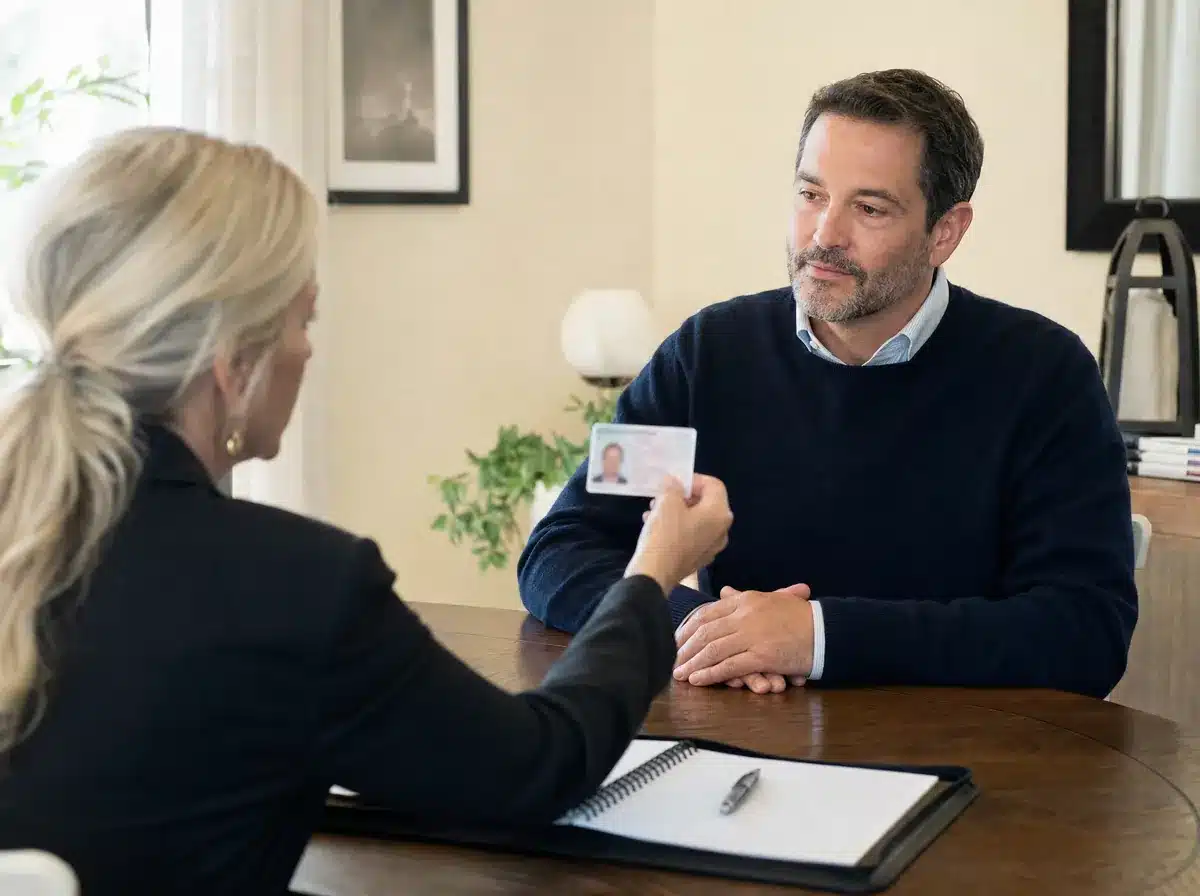
A Massachusetts notary must have satisfactory evidence of your identity under M.G.L. c.222 s.16, which in practice means a current government-issued photo ID bearing your signature. A Massachusetts driver’s license, a Mass ID card, a U.S. passport book or card, a U.S. military ID, a Permanent Resident Card, another state’s license or a current foreign passport all qualify.
What does not work: an expired card, a Social Security card, a birth certificate, a school or employer badge, and any photocopy or phone photo of an ID. An expired license is the single most common reason a signing cannot proceed; renew at the RMV or bring your passport. The full list is in our guide to what ID is accepted for notarization in Massachusetts.
When the name does not match. Minor differences are routine: an ID reading “Mary A. Smith” supports a document prepared for “Mary Smith,” because the ID contains at least the name on the document. The problem runs the other way. If the document says “Mary Ann Smith-Jones” and your license says “Mary Smith,” the ID does not establish that longer name and we cannot complete the certificate as written.
The fix belongs to whoever drafted the document. Before the appointment, ask the attorney, lender or agency to reissue the page in the name on your ID, or to confirm in writing which form they will accept; some lenders use a name affidavit for exactly this.
No ID at all. Massachusetts law allows identification by a credible witness in narrow circumstances. Tell us in advance so we can explain whether it fits your situation.
Should you sign the document before the notary arrives?
No. Leave the signature line blank and sign at the table while the notary watches. For two of the four notarial acts under M.G.L. c.222 s.15 the law gives you no choice: a jurat and a signature witnessing both require the signer to sign in the notary’s presence.
Jurats are the “sworn to and subscribed before me” certificates on affidavits, sworn statements and family court financial statements: you take an oath that the contents are true, then sign. Signature witnessings appear on bank, brokerage and insurance forms where the institution wants a notary to have watched the pen touch the paper. See our pages on affidavit notarization and signature witnessing.
Acknowledgments, the certificates on deeds, mortgages, powers of attorney and health care proxies, record that you appeared and acknowledged the signature as your free act. Massachusetts law allows you to acknowledge a signature made earlier. Even so, we ask every signer to sign at the table, because registries and lenders routinely reject documents where the signature date and notarization date differ, unless the receiving party has confirmed in writing that a pre-signed acknowledgment is acceptable.
If you already signed, it is almost always fixable with a fresh signature page. Never white out or cross through a signature on a page that will be recorded, and never write in the notary’s block, which begins “Commonwealth of Massachusetts.” Our explainer on the difference between an acknowledgment and a jurat in Massachusetts shows what each certificate looks like.
Who can be a witness, and who arranges them?
You arrange the witnesses. HireMobileNotary.com does not provide, bring, coordinate or serve as witnesses for any document. If your document needs witnesses, line them up before you book.
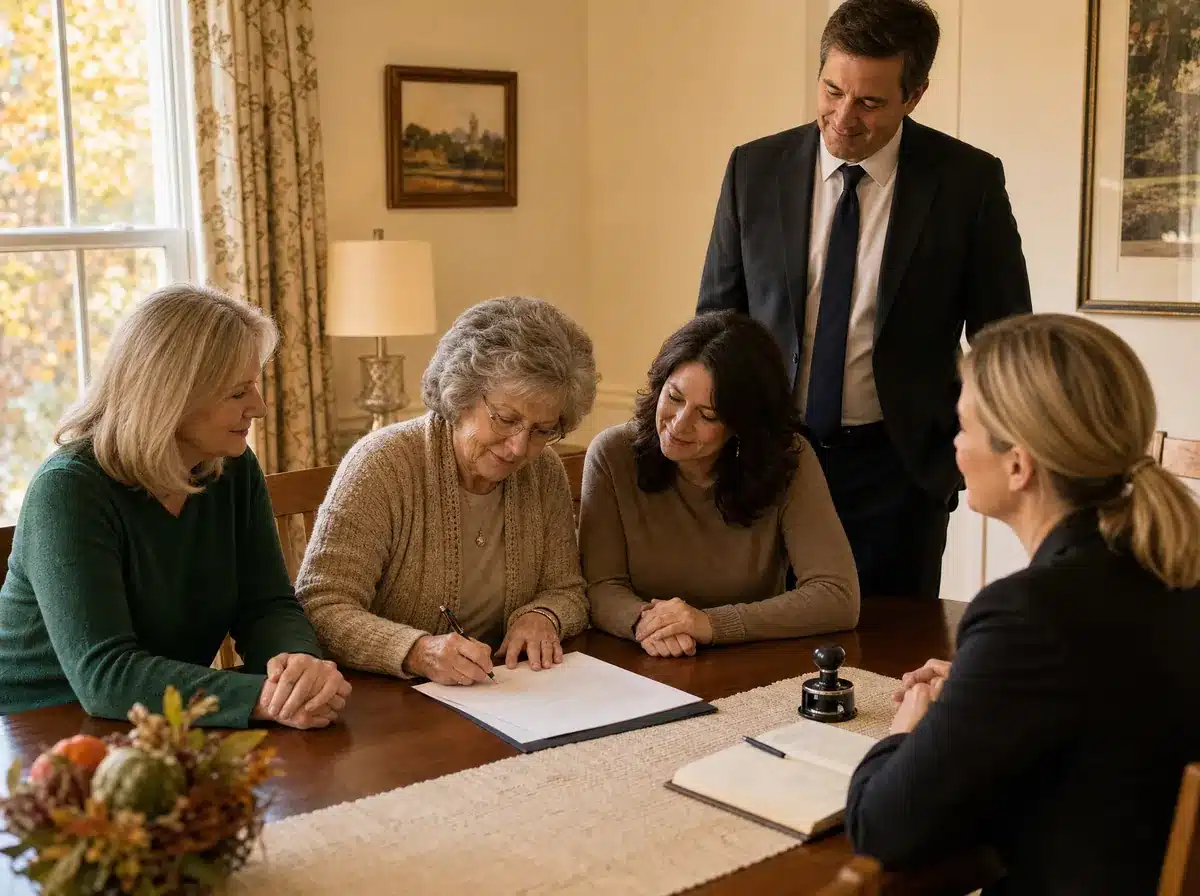
Which documents need them. A Massachusetts will must be signed in the presence of two witnesses under M.G.L. c.190B; the notary’s role is usually the self-proving affidavit. A health care proxy under M.G.L. c.201D requires two adult witnesses who are not the named agent. Powers of attorney, deeds and most affidavits need only the notary unless an out-of-state recipient asks otherwise. A notary cannot tell you whether your document legally requires witnesses; that question goes to the drafting attorney.
Who qualifies. A competent adult who is not a party to the document: not a beneficiary of the will, not the agent or alternate under the proxy. Neighbors, friends, coworkers and unrelated caregivers are the usual choices. A child who inherits is the wrong witness even where the law might tolerate it, because it invites a challenge later.
What witnesses bring and do. Each brings current photo ID, since we identify anyone whose signature is notarized on a witness affidavit. They watch you sign, then sign where indicated, about five minutes when everyone is present on arrival. Our trusts and wills notary page and health care proxy guide cover both documents in detail.
Which documents need extra preparation before the notary arrives?
Most routine notarizations need nothing beyond the checklist above. Eight document types carry their own rules about who signs, what to attach and how long to plan for.
Power of attorney
Fill in the principal’s and agent’s full legal names. Only the principal signs. Bring the whole instrument, since banks often want every page.
POA notarizationHealth care proxy
Two adult witnesses who are not the named agent, arranged by you. If the signer is in a facility, confirm their alert window with the nurse before booking.
Hospital notary serviceWills and trusts
Two witnesses you arrange, each with ID, plus the self-proving affidavit. Trust certifications need every trustee present. Plan 45 to 90 minutes for a full estate package.
Massachusetts notary publicDeeds and 6D certificates
Every grantor signs with ID. Check the property address and consideration lines. Registries reject altered deeds, so bring a clean copy.
Real estate notaryLoan signing packages
Massachusetts closings require an attorney; we are the signing agent supporting the closing attorney, title company or lender. Every borrower present with ID, nothing signed early, 60 to 90 minutes.
Loan signing agentDS-3053 passport consent
The non-applying parent signs in front of the notary. Complete every field except the signature, and bring a photocopy of the front and back of the same ID you show us; it attaches to the form.
Weekend notaryForm I-9
Not a notarization: we complete Section 2 as the employer’s authorized representative, with no seal. Have Section 1 done and your original List A or List B plus C documents in hand.
I-9 notary serviceApostille-bound documents
Know the destination country. Bring the clean original, because the Secretary of the Commonwealth authenticates the notary’s signature on that exact page.
Apostille serviceTwo cautions. A notary cannot draft these documents or explain what a clause means; our comparison of a Massachusetts notary and an attorney spells out that line. And tell us the document list when you book: a power of attorney plus a health care proxy is two notarial acts and two seals, and loan packages are quoted by complexity.
Ready to book your signing?
Tell us the document, the town and the time. We confirm the zone rate and the window before we dispatch, seven days a week.
How do you prepare for a hospital or nursing-home signing?
Confirm three things before you book: the patient is alert and able to understand and communicate, their photo ID is physically at the facility, and any witnesses the document needs will be in the room. Bedside signings at Lowell General, Lahey in Burlington, the Boston teaching hospitals and the region’s nursing homes are among our most common appointments, and these three checks decide whether they succeed.
Capacity and willingness. A notary must be satisfied that the signer understands the document and is signing willingly. We will stop a signing if the patient cannot tell us in their own words what they are signing and that they want to. Ask the nurse when the patient is most alert, usually morning, and book that window. For elder signings we also ask the family member being named as agent to step out for a brief private conversation with the signer.
ID at the bedside. Wallets go home with spouses. Confirm the license or passport is in the room or that someone is bringing it. A hospital wristband is not a government ID.
Facility logistics. Give us the facility, floor, room number and main desk phone, and tell the charge nurse or social worker a notary is coming so the visit does not collide with rounds. Some facilities limit visitors per room, which matters when two witnesses are coming for a health care proxy. Hospital and nursing-home visits in Boston are included in the Zone 3 rate; details are on our traveling notary page.
Documents. Bring complete, unsigned paper documents; hospital rooms rarely have a printer. If the patient has limited hand mobility, a signature by mark is possible under Massachusetts law, so tell us ahead of time.
What happens during a mobile notary appointment?
The notary arrives in the confirmed window, verifies every signer’s identity, watches the signatures, completes the certificate, applies the seal and records the act in a journal. A single document takes 10 to 25 minutes from the moment we sit down; estate packages and loan signings take longer.
- Arrival and setup
We arrive in the one-hour window you confirmed and ask for the signers and documents. If parking is tight in Cambridge or Back Bay, say so when you book.
- Identification
Each signer hands over original ID. We compare the photo, signature and name to the document and check the expiration date. Witnesses whose signatures will be notarized show ID too.
- Document review
We page through for blanks, missing exhibits, the certificate type and the county line. Questions about meaning go to the drafter, not the notary.
- Willingness and oath
Each signer confirms they know what the document is and are signing voluntarily. For a jurat, the oath or affirmation is administered here.
- Signing
You sign and date where indicated while we watch; witnesses sign in their places. Black ink is the safe default for anything to be recorded.
- Certificate, seal and journal
We complete and sign the certificate, apply the seal and enter the act in the journal with the date, document type, signer name and ID type.
- Payment and handoff
The quoted zone rate is settled by card, cash or check. The originals stay with you unless we are shipping a loan package or carrying a document for apostille.
Every mobile rate includes travel, one seal and 15 minutes of service: from $125 in Zone 1 (Tewksbury, Gardner, Ashby, Athol), from $179 in Zone 2 (Lowell, Andover, Worcester and 49 more towns) and from $250 in Zone 3 (Boston, Cambridge, Newton and 116 more). Extra seals and time are quoted before we confirm; see our notary zones page. In-office notarization at 1215 Main St, Suite 115 in Tewksbury is $45 per notarial act, with the same preparation.
Hanson Webb, commissioned since 2007 and an NNA Certified Loan Signing Agent, performs the signings personally in English, Arabic or French.
What happens after the notary leaves?
Your notarized originals stay with you, and the next job is getting them to the receiving party in the form it requires. Three paths cover most documents: you deliver the original yourself, we ship a loan package back to the closing attorney, or we carry the document to the Secretary of the Commonwealth for an apostille.
Scan everything first. Before the document leaves your hands, scan every page including the certificate and seal. The notary’s journal records that the act happened but holds no copy of your document. A recorded deed, a court filing or an apostille-bound document still needs the paper original.
Deeds. A notarized deed does nothing until it is recorded, at Middlesex North in Lowell, Middlesex South in Cambridge, Essex North in Lawrence, the Worcester District Registry or Suffolk in Boston depending on the property. Your closing attorney usually handles recording; a deed signed on Saturday is simply recorded Monday.
Loan packages. We ship the signed package back to the closing attorney, title company or lender the same day with the prepaid label they provided and send you the tracking number. The attorney then reviews, funds and records.
Apostilles. The Secretary of the Commonwealth’s office in Boston authenticates the notary’s signature and attaches the apostille for a $6 state fee plus our service fee. Tell us the destination country, since countries outside the Hague Apostille Convention need a different certification.
If something was missed. Occasionally a recipient asks for different certificate wording or a page that was not in the stack. A follow-up visit is a new appointment at the zone rate, which is why the five-minute check above is worth doing the night before. For a document that qualifies, remote online notarization, authorized in Massachusetts in 2023, is another option, though many recipients still require ink.
Whether you searched for a notary public near me in Woburn or need a bedside signing in Gloucester, the preparation is identical: ID, unsigned document, your witnesses, a table and the right act.
Notary appointment preparation FAQ
What should I bring to a notary appointment in Massachusetts?
Bring a current government-issued photo ID for every signer, the complete and unsigned document with all pages and exhibits, any witnesses your document requires, and the receiving party’s instructions if they specified a certificate or form of ID. Payment is settled at the table by card, cash or check at the zone rate quoted when you booked.
Can I use an expired driver’s license for a notarization?
No. Massachusetts notaries need current government-issued photo identification as satisfactory evidence of identity. If your license has expired, bring a valid U.S. passport, passport card, military ID or Permanent Resident Card instead, or renew at the RMV before the appointment. A photocopy or a phone photo of an ID is not acceptable in any case.
Should I sign my document before the mobile notary arrives?
No. Sign at the table while the notary watches. Jurats and signature witnessings legally require signing in the notary’s presence, and we ask for a fresh signature on acknowledgments as well because registries and lenders reject mismatched dates. If you already signed, a clean copy of the signature page usually solves it; do not cross out or white out anything.
Do you provide witnesses for wills and health care proxies?
No. We do not provide, bring or arrange witnesses for any document. A Massachusetts will needs two adult witnesses and a health care proxy needs two adult witnesses who are not the named agent, and you arrange them before the appointment. Choose adults who are not beneficiaries or agents, and have each bring photo ID.
How long does a mobile notary appointment take?
A single document usually takes 10 to 25 minutes once we sit down, which fits the 15 minutes of service included in every zone rate when the signer is prepared. A health care proxy and power of attorney together take about 30 minutes. Estate packages and loan signings run 45 to 90 minutes. Additional time and seals are quoted before we confirm.
What happens if the name on my ID does not match my document?
If the ID contains at least the name on the document, for example “Mary A. Smith” on the ID and “Mary Smith” on the document, we can proceed. If the document shows a longer or different name than the ID, we cannot complete the certificate as written. Contact the attorney, lender or agency that prepared the document before the appointment and ask them to reissue the page or confirm an acceptable form of the name.

1,190+ signings across Greater Boston, the Merrimack Valley and Central Massachusetts. Background screened, bonded and E&O insured. Fluent in English, Arabic and French. About Hanson


