
Massachusetts Notary Public Services
Hanson Webb is a Massachusetts notary public commissioned since 2007. Notarize in our Tewksbury office for $45 per act, or have the notary come to you anywhere in 177 cities and towns across Greater Boston, the Merrimack Valley, Central Massachusetts and the North Shore.
What is a Massachusetts notary public and what does one do?
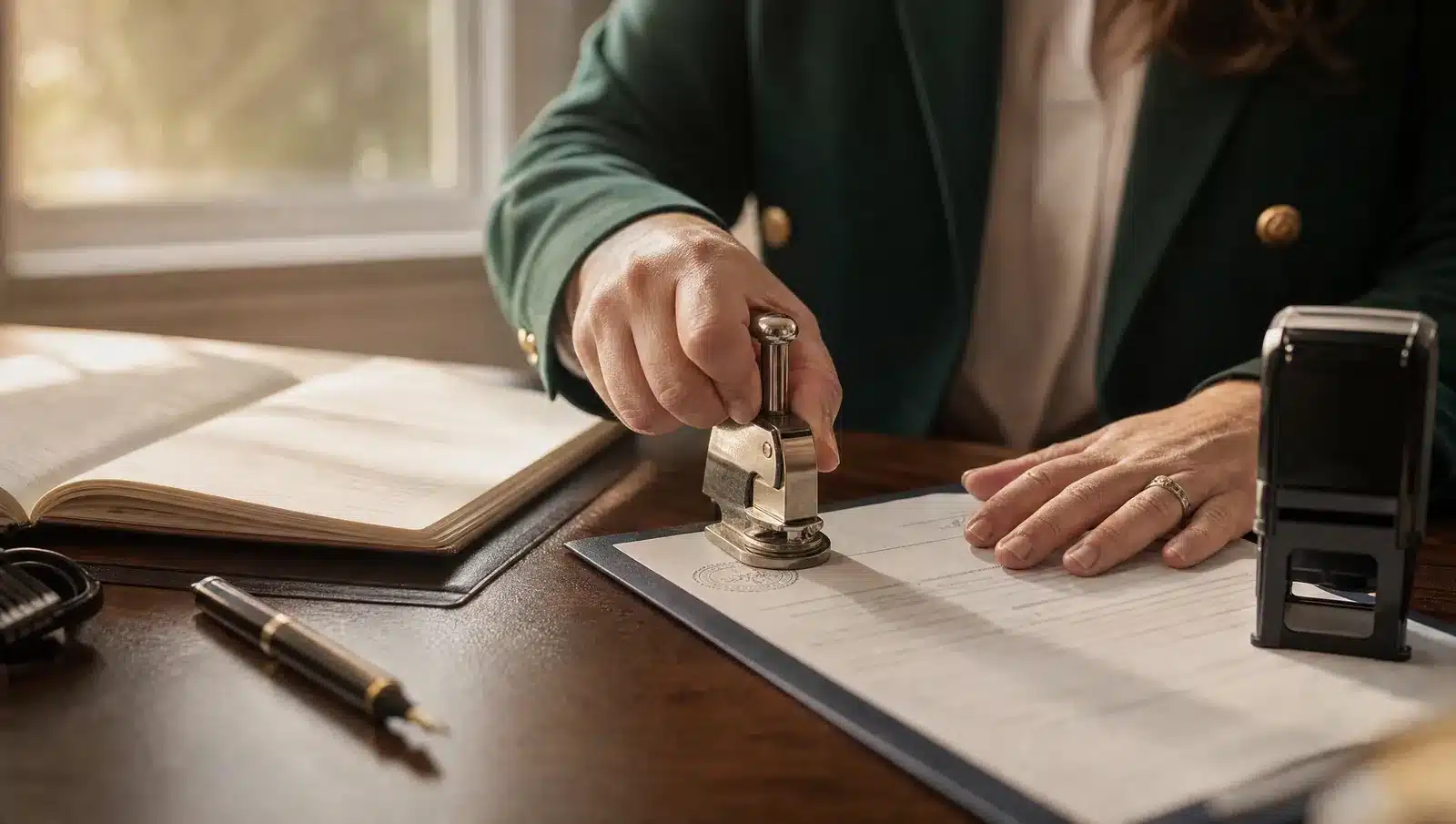
A Massachusetts notary public is a public officer appointed by the Governor, with the advice and consent of the Governor’s Council, for a seven-year term under M.G.L. c.222. The notary’s job is to deter fraud by confirming who is signing a document, confirming that they sign willingly, and recording the act with a signature, an official seal and a journal entry.
The commission is personal to the notary. It names the individual, not a business, and it expires on a fixed date seven years after it is issued. Every certificate we complete shows that expiration date. A notary whose commission has lapsed has no authority, and a document notarized by one can be rejected by a registry, a court or a bank.
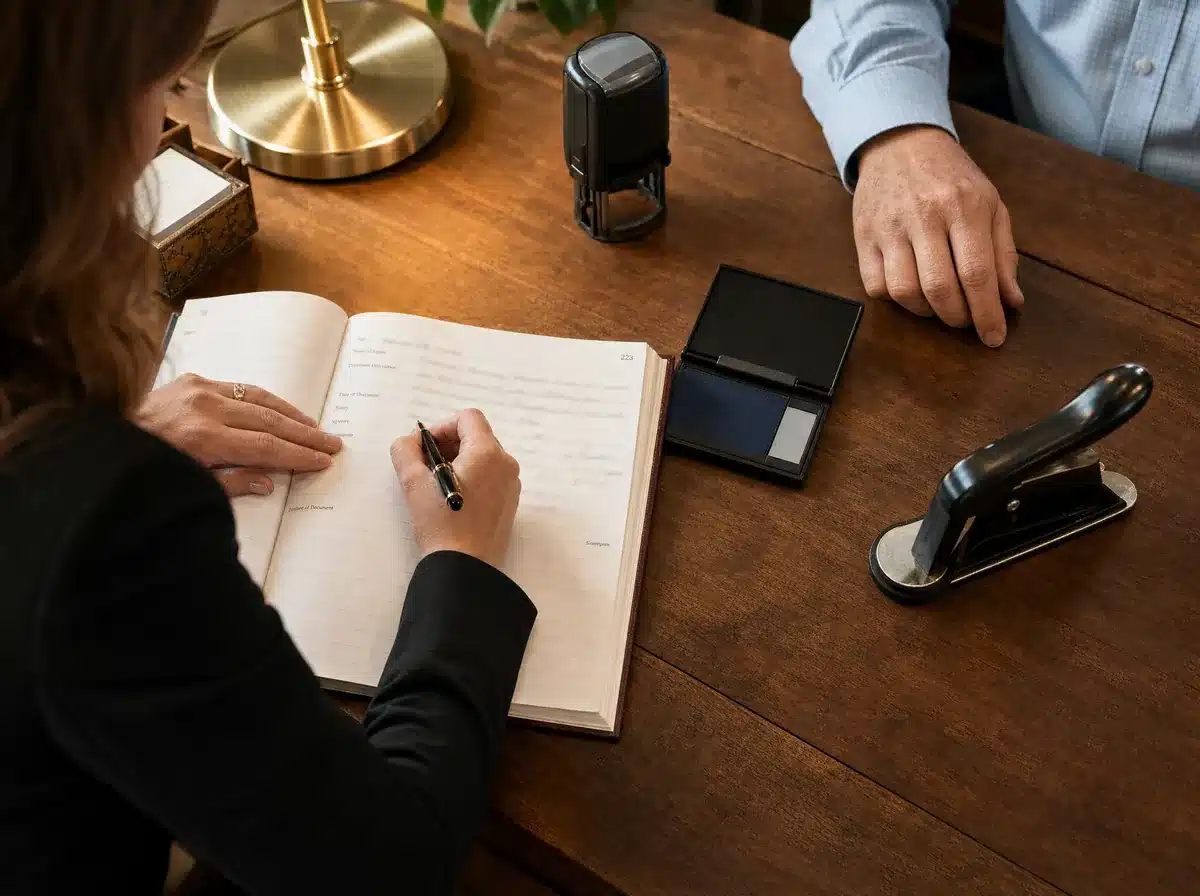
Massachusetts spells out the standards of conduct in M.G.L. c.222, chiefly sections 16 and 22. Those rules require the notary to identify every signer with satisfactory evidence of identity, to refuse any act where the signer appears confused, coerced or unwilling, and to keep a chronological journal of each notarization. The journal is why we ask for your name, address, ID type and signature at every appointment. It is not optional paperwork; it is the record that protects you if the notarization is ever questioned.
Massachusetts does not require a notary to carry a surety bond or errors-and-omissions insurance. We carry both, and Hanson Webb is background screened and certified by the National Notary Association as a loan signing agent. That matters most for deeds, mortgages and powers of attorney, where the receiving party wants a notary accountable beyond the state minimum. Read more on the About Hanson Webb page.
The notary’s certificate speaks only to the signing: who appeared, how they were identified, what they declared and when. It says nothing about whether the document is well drafted or right for your situation. The full list of limits is below in what a notary cannot do.
Which notarial acts can a Massachusetts notary public perform?
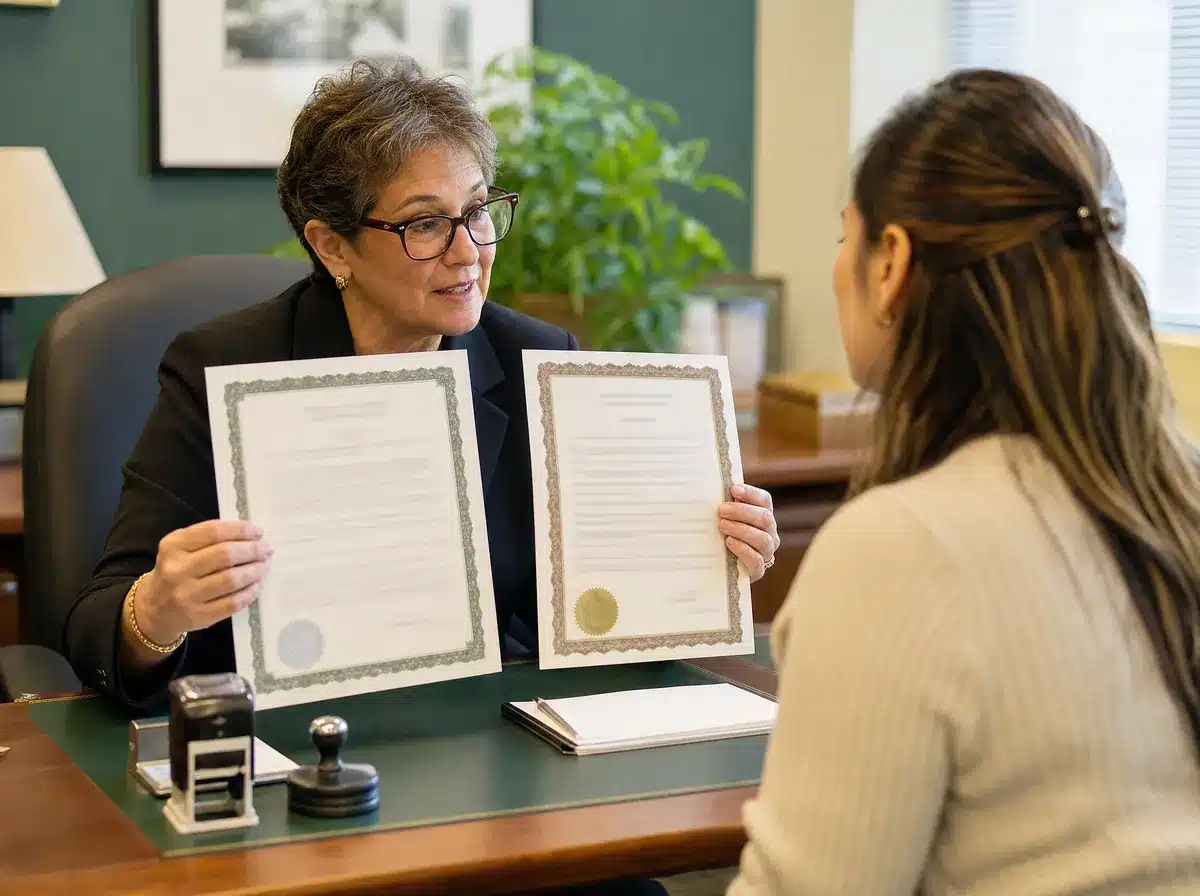
Massachusetts law, including M.G.L. c.222 s.15, authorizes a notary public to perform acknowledgments, jurats, signature witnessings, copy certifications, and oaths and affirmations. The document, not the notary, dictates which act is required, and using the wrong certificate can get a document rejected.
Acknowledgment. You confirm to the notary that you signed the document voluntarily for the purpose stated in it. No oath is taken. You may sign before you arrive, as long as you appear in person and acknowledge the signature as yours. Acknowledgments are used on deeds, mortgages, powers of attorney, health care proxies, trusts, contracts, vehicle bills of sale and CORI forms. The certificate language says “personally appeared” and “acknowledged to me that he or she signed it voluntarily.”
Jurat. You swear or affirm, in front of the notary, that the contents of the document are true, and you sign in the notary’s presence. The notary administers the oath out loud and you answer it. Jurats are used on affidavits, sworn statements, immigration affidavits of support, single status affidavits, self-proving affidavits for wills and depositions. The certificate says “subscribed and sworn to before me” or “made oath that the statements contained in it are true.”
Signature witnessing. You sign in the notary’s presence after being identified, but no oath is taken and no acknowledgment of a prior signature is involved. It is used when a receiving party simply wants proof that a particular person signed on a particular date. See our signature witnessing service for details.
Copy certification. The notary compares a copy against an original you present and certifies that the copy is complete and accurate. Massachusetts notaries cannot copy-certify vital records such as birth, death or marriage certificates, or documents that are publicly recordable, because the issuing authority is the only source of certified copies. Passports, diplomas, transcripts and private letters are common requests. Our copy certification page explains what qualifies.
Oaths and affirmations. A standalone verbal oath or affirmation, with no document attached, administered to a person who must swear to something: a witness before a deposition, an officer taking office, a translator attesting to accuracy. An affirmation is the non-religious equivalent of an oath and carries the same legal weight.
If the document has no pre-printed certificate, you or the receiving party must tell us which act you want, since the notary cannot choose for you. Our guide to acknowledgment vs jurat in Massachusetts walks through the differences with examples.
What ID does a Massachusetts notary public accept?
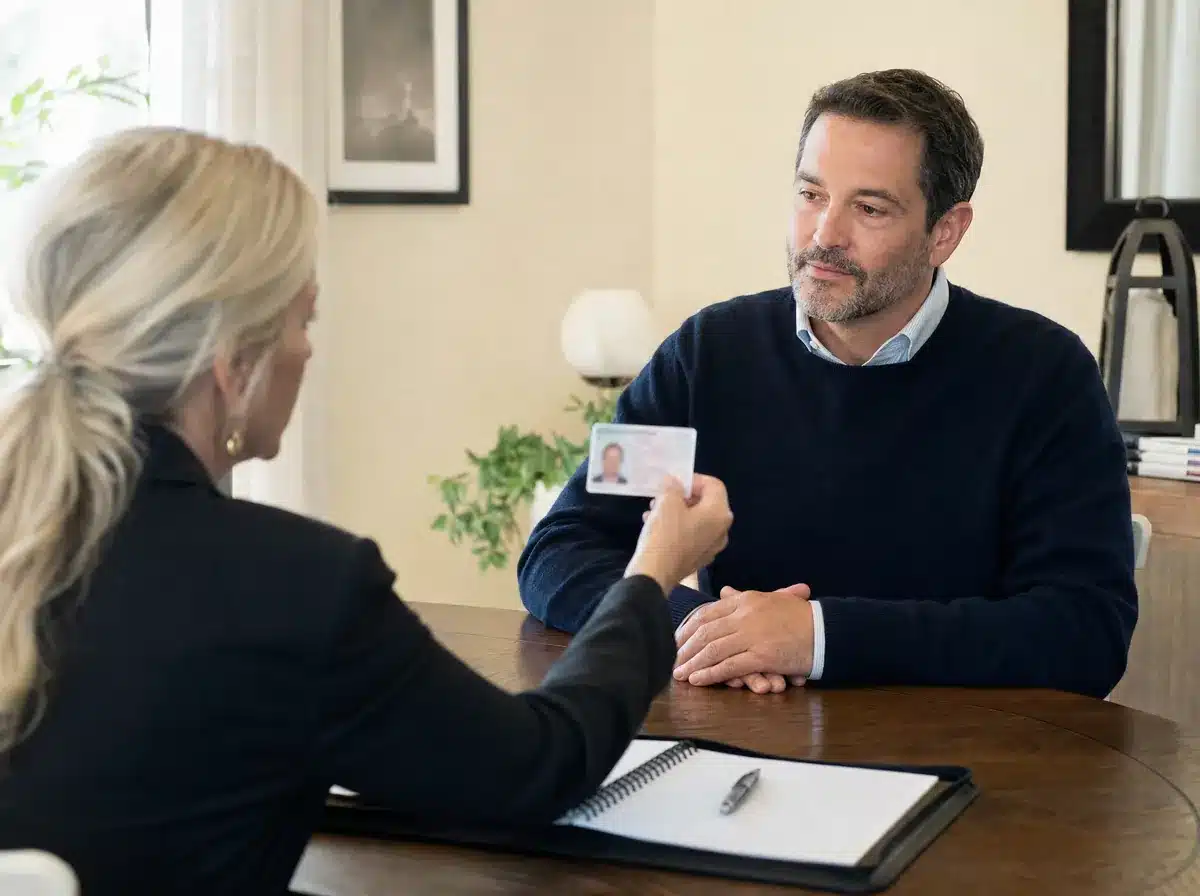
A Massachusetts notary accepts a current government-issued photo ID that shows your photograph and signature, such as a Massachusetts driver’s license, Mass ID, US passport, passport card, Permanent Resident Card, US military ID or a current foreign passport. If you have no acceptable ID, M.G.L. c.222 s.1 allows only the oath of one credible witness who is personally known to the notary and who personally knows you, or the notary’s personal knowledge of you.
The ID must be the original physical document, not a photo or photocopy, and current at the time of the act. M.G.L. c.222 s.1 defines satisfactory evidence of identity as a current government-issued document bearing your photograph and signature and sets no grace period, so an expired ID is not accepted for any notarial act, however recently it lapsed. If your license has expired, bring a current passport or other accepted document, or renew first; lenders, courts and USCIS apply the same current-ID standard.
Also acceptable: driver’s licenses and state IDs from any US state, USCIS Employment Authorization Documents (Form I-766) for most purposes other than real estate closings, and tribal photo IDs from federally recognized tribes. What does not work: Social Security cards, birth certificates, student IDs from Harvard, MIT, BU or any other school, library and gym cards, vehicle registrations, insurance cards and hospital wristbands. Our full list is in the guide to what ID is accepted for notarization in Massachusetts.
The credible-witness alternative. When a signer has no ID, which happens most often at hospitals, nursing homes and hospice facilities, M.G.L. c.222 s.1 permits identification by the oath or affirmation of one credible witness who is personally known to the notary, who personally knows the signer, and who is unaffected by the document. Bringing acquaintances the notary has never met does not satisfy the statute, so this path is rarely available. When it applies, we record the witness in the journal, administer the oath that the signer is who they claim to be, and the witness signs a credible witness affidavit. Some receiving parties, including lenders, USCIS and foreign consulates, will not accept a credible-witness notarization, so check before relying on it.
Names on the ID and document must reasonably match. A maiden name on a license with a married name on a deed is usually fine if you sign the name on the ID and bring the marriage certificate.
How does a notarization appointment work in Massachusetts?
A notarization appointment takes about fifteen minutes per document once you are at the table with a valid ID and a complete, unsigned document if a jurat is required. You request a time, we confirm the rate and location, the notary verifies your identity, you sign or acknowledge, the notary completes the certificate and seal, and the act is entered in the journal.
- Request
Call or text (978) 424-4629, or book online, with the document type, number of signers, the address and your preferred time. Tell us if anyone is in a hospital or care facility, if a witness will be present, or if the document is in Arabic or French.
- Prepare
Fill in every blank except the signature and date lines. Do not sign a document that needs a jurat; wait for the notary. Gather a current photo ID for each signer and confirm with the receiving party that the certificate on the document is the one they want. Our preparation checklist covers the details.
- Identify
The notary inspects each signer’s original ID, compares the photo to the person, and screens for willingness and awareness. If a signer cannot answer basic questions about what they are signing, the notary must stop.
- Sign and seal
You sign or acknowledge as the act requires. For a jurat the notary administers the oath aloud. The notary then completes the certificate with the county, date, your name and ID type, signs it, and applies the Massachusetts notary seal.
- Record and finish
The act is recorded in the notary’s journal with your signature. You keep your originals. If your document is going abroad, we can carry it to the next step with apostille service through the Secretary of the Commonwealth.
How much does a notary public cost in Massachusetts?
In-office notarization at our Tewksbury location is $45 per notarial act, and mobile notary visits start at $125 including travel, one notary seal and fifteen minutes of service. Mobile pricing is set by zone so you know the rate before we dispatch, and additional seals, extra signers and time beyond the first fifteen minutes are quoted up front.
- Tewksbury, Gardner, Ashby, Athol
- Travel included
- 1 seal + 15 minutes
- Lowell, Billerica, Andover, Chelmsford, Dracut, Lawrence, Worcester, Fitchburg, Leominster, Concord, Burlington, Woburn + 40 more
- Travel included
- Same-day, 7 days
- Boston, Cambridge, Newton, Wellesley, Weston, Lynn, Gloucester, North Andover + 110 more
- Hospital and nursing-home visits included
- Travel included
In-office appointments at 1215 Main St, Suite 115, Tewksbury, MA 01876 are $45 per notarial act; see in-office notary service. Apostille processing is the $6 Massachusetts state fee plus our service fee. Loan signings and multi-document appointments are quoted by complexity. The full town-by-town list is on the notary zones page, and our guide to the cost of a mobile notary in Massachusetts explains what drives the quote.
Need a Massachusetts notary today?
Walk-in and scheduled appointments in Tewksbury, or a mobile visit anywhere in 177 towns. Flat pricing confirmed before we leave.
Which documents does a Massachusetts notary public commonly handle?
The documents we notarize most often are powers of attorney, real estate deeds and mortgage packages, health care proxies, wills and trusts, affidavits, I-9 and CORI forms, copy certifications and corporate resolutions. Each has its own certificate type, witness rules and receiving-party expectations, so the links below lead to a page about that specific document.
Power of attorney
Durable, limited and springing POAs under M.G.L. c.190B. Acknowledgment certificate; the principal must appear and be competent.
POA notarizationReal estate documents
Quitclaim deeds, mortgages, 6D certificates, homestead declarations and refinance packages for the Registry of Deeds.
Real estate notaryHealth care proxy
Massachusetts health care proxies under M.G.L. c.201D, at the bedside in hospitals, rehab centers and nursing homes.
Hospital notary serviceWills and trusts
Self-proving affidavits, trust certifications and trust amendments. Witnesses for a will are the family’s own.
Trusts and willsAffidavits and sworn statements
Jurat certificate with an oath. Court affidavits, immigration affidavits of support, single status affidavits.
Affidavit notarizationI-9 employment verification
Section 2 completion as an authorized representative for remote hires at Massachusetts employers.
I-9 notary serviceCORI forms
Criminal Offender Record Information acknowledgment forms for employers, landlords, schools and volunteer programs.
CORI notarizationCopy certification
Certified true copies of passports, diplomas, transcripts and letters. Not available for vital records.
Certified copiesBusiness and corporate
Corporate resolutions, LLC operating agreements, commercial leases, vendor contracts and bank account resolutions.
Business notaryFor a mortgage or refinance package, Hanson acts as the loan signing agent supporting the closing attorney, title company or lender. For a client who cannot travel, our traveling notary service brings the same seal and journal to a home, hospital room or care facility.
What can a notary public not do in Massachusetts?
A Massachusetts notary public cannot give legal advice, draft or select documents, explain what a document will do, provide witnesses, conduct a real estate closing, or notarize a document written in a language the notary cannot read. These are limits set by Massachusetts law and the standards of conduct in M.G.L. c.222, and a notary who crosses them risks the commission.
No legal advice. We are not attorneys and HireMobileNotary.com is not a law firm. We cannot tell you whether you need a durable or a limited power of attorney, whether your deed should be quitclaim or warranty, or what a clause means. We can tell you what notarial act the certificate calls for and what ID you need. For anything beyond that, consult a licensed Massachusetts attorney. Our comparison of a Massachusetts notary vs an attorney explains where the line falls.
No witnesses. We do not provide, bring, coordinate or serve as witnesses under any circumstances. A Massachusetts will requires two witnesses; some health care proxies and out-of-state documents require one or two. If your document needs them, you arrange adults with valid ID who are not named in the document. The notary cannot double as a witness on a document the notary is notarizing.
No attorney-only closings. In Massachusetts, a real estate closing must be conducted by a licensed attorney. A notary signing agent cannot conduct, run or supervise a closing. We act as the notary and signing agent who meets the borrower, verifies identity, witnesses signatures on the lender’s package and returns the documents to the closing attorney or title company.
No documents we cannot read. A notary must be able to understand the document well enough to complete the certificate and to communicate directly with the signer, without an interpreter, about what is being signed. We read and speak English, Arabic and French, so we can notarize documents written in any of those three languages and we offer a dedicated Arabic notary service and French document notary service. For a document in Spanish, Portuguese, Mandarin or any other language, we will refer you elsewhere rather than notarize what we cannot read. The notarial certificate itself is always completed in English.
Other limits. A notary cannot notarize their own signature, cannot notarize for a spouse, parent, child or sibling, and cannot act with a financial interest in the document. A notary cannot notarize for a signer who is not physically present, cannot notarize a blank or incomplete document, and cannot backdate a certificate. A notary must refuse when a signer appears confused, intoxicated or pressured, which is why we sometimes decline a bedside notarization and ask the family to return when the patient is alert.
Do you need an apostille after notarization?
You need an apostille when a document notarized in Massachusetts will be used in another country that is party to the Hague Apostille Convention. The apostille is a certificate issued by the Massachusetts Secretary of the Commonwealth that authenticates the notary’s signature and commission, and it is a separate step after the notarization itself.
The sequence matters. The document is first notarized by a commissioned Massachusetts notary, then submitted to the Secretary of the Commonwealth, who verifies the notary against state records and attaches the apostille. The state fee is $6 per document, plus our service fee for handling the submission so you do not have to travel to Boston. Typical requests are powers of attorney for property abroad, single status affidavits for marriage overseas, diploma copies for foreign employers, and corporate documents for international registration.
For countries outside the Hague Convention, the process is called authentication and usually adds the US Department of State and the destination country’s consulate. We handle the Massachusetts portion either way. Full details and pricing are on our Massachusetts apostille service page.
One caution: the apostille authenticates the notary, not the content, so a wrong certificate type or a missing seal will cause the destination country to reject the document even with a valid apostille. And the Secretary of the Commonwealth only apostilles Massachusetts notarizations, so have the document notarized here if it is leaving the country from here.
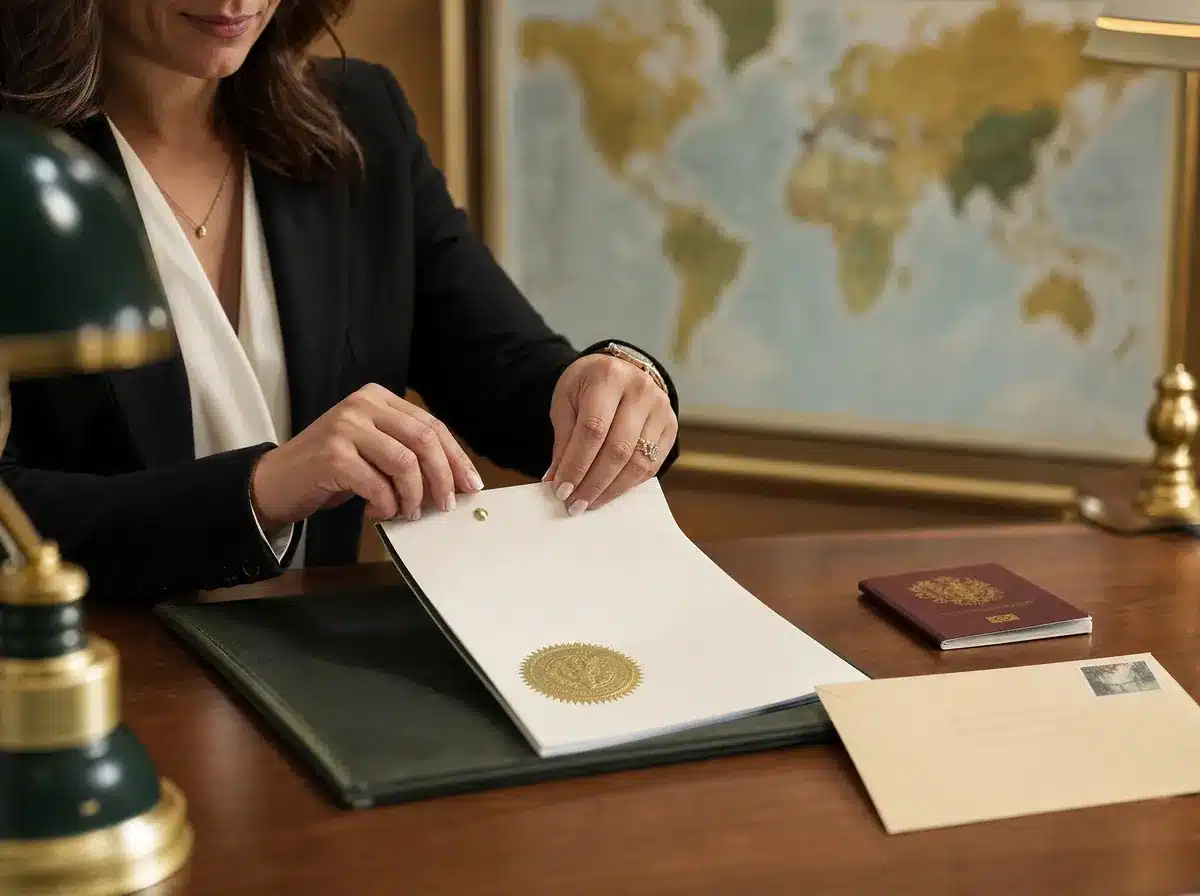

Can a Massachusetts notary notarize a document for another state?
Yes. A Massachusetts notary public can notarize a document that will be filed or used in any other state or country, as long as the signer appears before the notary physically inside Massachusetts. The notary’s authority stops at the state line, but the document’s destination is irrelevant to the validity of the act.
What changes is the certificate. Many states print their own certificate wording on their forms, and a Massachusetts notary can complete that certificate as long as it does not call for an act Massachusetts law does not permit. When it does, we attach a Massachusetts-compliant certificate instead, with the venue noted as the Commonwealth of Massachusetts and the county of signing. Every state honors a notarization properly performed under the law of the state where it happened.
The reverse is also true. A document notarized by a commissioned notary in New Hampshire, Florida or any other state is generally accepted in Massachusetts, including at the Registry of Deeds, provided the notarization was valid where it was performed and the certificate is complete.
Where location truly matters is the signer’s body. A Massachusetts notary cannot notarize for a signer who is standing in Nashua or Providence, even by phone or video, unless the act is a remote online notarization performed under 2023 Acts c.2 on an approved platform. In a RON session the notary must be physically in Massachusetts, identity is verified by knowledge-based authentication and credential analysis, and the session is recorded. Our remote online notarization page explains when RON is accepted, and our guide to mobile vs online notary in Massachusetts compares the two.
We handle a steady flow of cross-border work: Massachusetts residents signing New Hampshire deeds, Florida snowbirds signing Massachusetts powers of attorney while home for the summer, and officers at Burlington and Waltham companies signing resolutions for Delaware entities.
Where do we provide notary public services in Massachusetts?
We notarize in our Tewksbury office and by mobile visit across 177 Massachusetts cities and towns, from the Merrimack Valley and Central Massachusetts to Metro Boston and the North Shore. The office at 1215 Main St, Suite 115 sits off Route 38 near I-495 and I-93, which puts Lowell, Andover, Billerica, Wilmington and Chelmsford within fifteen minutes. If you are searching for a notary public near me, one of these pages covers your town, and the complete list is on our service locations page.
Massachusetts notary public FAQ
Do you provide witnesses?
No. We do not provide, bring, coordinate or serve as witnesses. If your will, health care proxy or other document requires witnesses, you arrange qualified adult witnesses with valid ID before the appointment. A credible witness used to identify a signer who has no ID must already be personally known to the notary under M.G.L. c.222 s.1.
How much does a notary public cost in Massachusetts?
In-office notarization at our Tewksbury location is $45 per notarial act. Mobile visits start at $125 in Zone 1 (Tewksbury, Gardner, Ashby, Athol), $179 in Zone 2 (Lowell, Andover, Worcester and 49 more towns) and $250 in Zone 3 (Boston, Cambridge, Newton and 117 more). Every mobile rate includes travel, one seal and fifteen minutes of service.
Should I sign my document before the notary arrives?
It depends on the certificate. For an acknowledgment, you may sign in advance and then acknowledge the signature in front of the notary. For a jurat or signature witnessing, you must sign in the notary’s presence. If you are not sure which one your document carries, leave it unsigned and the notary will tell you.
What if my ID is expired?
An expired ID is not accepted. M.G.L. c.222 s.1 requires a current government-issued document with your photograph and signature and allows no grace period, so bring a current passport or other accepted ID, or renew first. Without acceptable ID, M.G.L. c.222 s.1 allows only one credible witness who is personally known to the notary and who personally knows you, or the notary’s personal knowledge of you.
Can a Massachusetts notary notarize a will?
Yes, a notary can notarize the self-proving affidavit attached to a Massachusetts will, which lets the will be admitted to probate without calling the witnesses. The will itself must still be signed in front of two witnesses that you provide. The notary cannot serve as one of those witnesses and cannot advise on the will’s contents.
Can you notarize a document that will be used in another state or country?
Yes. As long as you appear before the notary inside Massachusetts with valid ID, the notarization is valid for use in any state. For use abroad, the notarized document usually needs an apostille from the Massachusetts Secretary of the Commonwealth, which we can process for the $6 state fee plus our service fee.
Do you notarize at hospitals and nursing homes?
Yes. Bedside notarizations at hospitals, rehabilitation centers, nursing homes and hospice facilities are included in Zone 3 pricing and available in all zones. The patient must be alert, able to communicate with the notary and able to present ID (a credible witness substitutes only if personally known to the notary under M.G.L. c.222 s.1). We will decline if the patient cannot demonstrate awareness of what they are signing.
Can the notary tell me which document or form I need?
No. A Massachusetts notary cannot give legal advice, choose documents, draft them or explain their legal effect. We can tell you which notarial act the certificate on your document requires and what ID to bring. For questions about which document fits your situation, consult a licensed Massachusetts attorney.

1,190+ signings across Greater Boston, the Merrimack Valley and Central Massachusetts. Background screened, bonded and E&O insured. Fluent in English, Arabic and French. About Hanson