

Traveling Notary Public in Massachusetts
A commissioned Massachusetts notary public who drives to your home, hospital room, nursing home, office or hotel lobby and notarizes on the spot. Seven days a week across 177 cities and towns in Greater Boston, the Merrimack Valley, Central Massachusetts and the North Shore.
What is a traveling notary, and how is it different from a notary at a bank or UPS store?
A traveling notary is a commissioned Massachusetts notary public who comes to your location to notarize documents instead of asking you to come to a counter. The notarization itself is identical to what you would receive at a bank, a law office or a shipping store; the only difference is who does the driving.
Every notary public in Massachusetts holds the same commission under M.G.L. c.222 and performs the same notarial acts listed in M.G.L. c.222 s.15: acknowledgments, jurats, signature witnessings and copy certifications. A traveling notary, a mobile notary and the notary sitting behind the desk at your branch are all held to the same standards of conduct under M.G.L. c.222 s.16. What changes is access.
A bank notary is usually available only to account holders, only during branch hours and only when the one commissioned employee happens to be in. Many branches decline wills, powers of attorney and anything that looks like an estate document as a matter of policy, and none of them will walk to a hospital bed. A shipping-store notary works from a public counter, cannot step away from the register and will not take three signers into a private room for a 45-minute signing.
A traveling notary flips that around. You pick the place and the time. We arrive with the embossed seal, the inked stamp, the bound journal, blank acknowledgment and jurat certificates and a portable printer for a missing page. Confidential documents never leave your home or your attorney’s conference room, and the signing happens when your family, your buyer or your closing attorney can actually be present.
Two things do not change when the notary travels. We still cannot give legal advice, draft your document or explain what it will do once signed; that is an attorney’s role, and the line between a Massachusetts notary and an attorney matters more at a kitchen table than it does at a bank. And we still do not provide witnesses. If your document needs them, you arrange them before we arrive.
Massachusetts also allows remote online notarization under 2023 Acts c.2. When a document must be signed in ink with the notary physically present, a traveling notary is the practical choice.
Where can a traveling notary meet you in Massachusetts?
A traveling notary can meet you anywhere a signer can sit, present ID and sign: a home, a hospital room, a care facility, an office, a law firm, a bank lobby, a hotel, an airport or a coffee shop. These nine locations account for most of our 1,190+ signings since 2007.
Your home
Kitchen-table powers of attorney, deeds, trust documents and I-9 forms. The most common traveling notary visit in Massachusetts.
Prepare for a home visitHospitals
Bedside health care proxies, durable POAs and HIPAA releases at MGH, Brigham and Women’s, Lahey, Lowell General, Newton-Wellesley and UMass Memorial.
Hospital notary serviceNursing homes and assisted living
Skilled nursing, memory care, rehab and assisted living residences, scheduled around care routines and visitor policies.
Health care proxy visitsOffices and workplaces
Corporate resolutions, employment forms and vendor contracts signed in your conference room on your schedule.
Business notaryLaw firms and attorney offices
Real estate signings, estate plans and affidavits where the drafting attorney is present and needs a notary at the table.
Real estate notaryBanks and credit unions
When the branch has no notary on duty or declines your document, we meet you in the lobby and notarize before you hand it across the desk.
POA notarizationHotels
Visiting executives, relocating families and international travelers sign in the lobby or a meeting room, in English, Arabic or French.
Boston notaryAirports
Pre-security meeting points at Logan and airport hotels along Route 1A for a signature that has to happen before a flight.
Urgent Boston visitsCoffee shops and public spots
A neutral table in Cambridge, Waltham or Lowell for I-9 verifications, affidavits and single-signature documents.
I-9 notaryOne rule applies everywhere: the person signing must be physically present with valid ID. A traveling notary cannot notarize for a spouse, parent or client who is not in the room.
How do hospital and bedside notary visits work?
A hospital notary visit is a traveling notary appointment at the patient’s bedside, most often for a health care proxy, a durable power of attorney or a HIPAA authorization. The notarization follows the same Massachusetts procedure as any other; the setting simply demands more coordination and more care.
We make regular bedside visits to Massachusetts General Hospital, Brigham and Women’s Hospital, Lahey Hospital and Medical Center in Burlington, Lowell General Hospital, Newton-Wellesley Hospital and UMass Memorial Medical Center in Worcester, along with rehabilitation hospitals, skilled nursing floors, memory care units and inpatient hospice houses. Many of these calls come from a social worker or discharge planner who discovered that the proxy was never signed. Our hospital notary service page lists the facilities we visit most.
Capacity. Under M.G.L. c.222 s.16 a Massachusetts notary must confirm the signer’s identity, willingness and awareness of what is being signed. At a bedside we do this with a short, calm conversation, ideally with the named agent out of the room, asking the patient what the document is and who is being appointed. We are not clinicians and do not assess medical capacity, but if the patient cannot name the document or the agent, or signs only when prompted, we stop and explain politely. Families often reschedule for a better window in the day, because medication timing and lucidity matter.
Identification. The patient needs a current, unexpired government-issued photo ID: a Massachusetts driver’s license, a Mass ID or a U.S. passport. Wallets tend to be at home when someone is admitted, so ask a family member to bring the ID before we arrive. If no ID can be produced, M.G.L. c.222 s.1 allows only a credible witness who is personally known to the notary and who personally knows the patient, or the notary’s own personal knowledge, so in practice the ID has to be found. We do not supply witnesses.
Witnesses. A Massachusetts health care proxy under M.G.L. c.201D must be signed in front of two adult witnesses, and the named agent cannot be one of them. We do not provide, supply or coordinate witnesses. The family arranges them and has them in the room before the signing starts.
Timing. We call the floor nurse, social worker or case manager before we leave Tewksbury to confirm visiting policy, room number and whether a quiet space is available. A typical bedside visit takes 25 to 45 minutes from reaching the floor to leaving it, with 15 to 25 minutes at the bedside. Pre-surgical signings are timed to finish before sedation begins. Hospital and nursing-home visits are included in our Zone 3 travel rate, and we send a clean scan to the family or attorney the same day on request.

What should families expect from senior living and home visits?
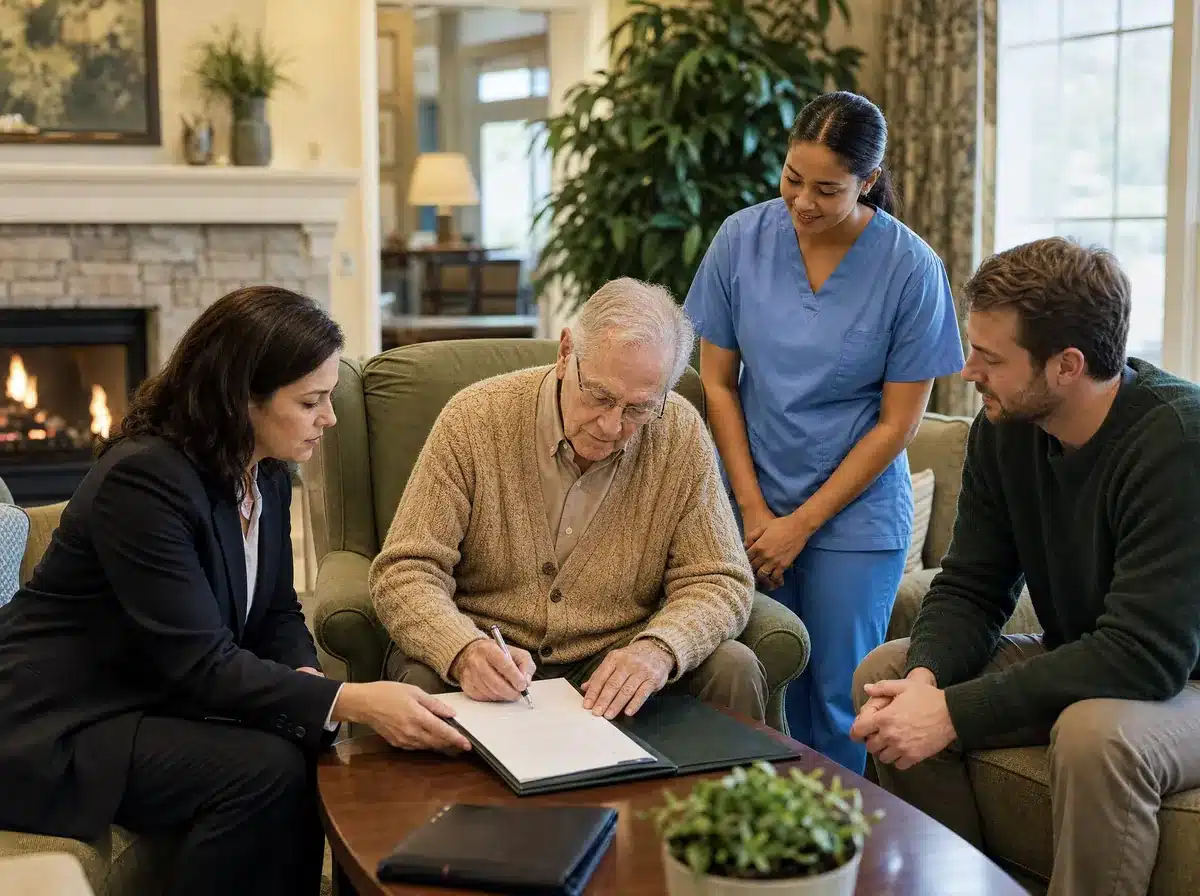
Senior living and home visits are the quiet core of traveling notary work: an older adult signs a power of attorney, a trust document or a deed at the kitchen table or in a residence common room, with the people who matter in the room. Expect a scheduled arrival window, a short identity and awareness conversation, and a signing that takes 20 to 40 minutes depending on the number of documents.
We visit assisted living and memory care communities across Middlesex, Essex, Worcester and Suffolk counties, including the Wingate, Sunrise, Brightview and Atria networks and dozens of independent skilled nursing facilities. Each community has its own visitor procedure. We call the front desk or the resident care director ahead of time, add our name to the visitor list where required and arrange a private room if the resident shares one.
The documents are predictable. A durable power of attorney under M.G.L. c.190B lets an adult child handle banking, benefits and real estate. A health care proxy under M.G.L. c.201D names a medical decision-maker. Trustee certifications and deeds into trust complete a plan an attorney has already drafted. Massachusetts wills are witnessed rather than notarized, but the self-proving affidavit attached to a will is signed by the testator and both witnesses in front of a notary, a frequent reason for a home call. See our trusts and wills notary page.
Home visits for older adults go smoothly when a few things are set. Choose a table with good light rather than a recliner. Put every page of every document in order, unsigned, with the signer’s license or passport on the table. If witnesses are needed, have two adults who are not named in any document present when we arrive; we cannot bring them.
Our notary speaks English, Arabic and French. For a parent who grew up in Lebanon, Morocco, Haiti or Quebec, hearing the identity and willingness questions in a familiar language takes stress out of the room and lets the notary confirm awareness directly rather than through an interpreter.
Can a traveling notary come after hours, on weekends or the same day?
Yes. We travel seven days a week, including weeknight evenings until 9 PM and Saturday and Sunday appointments, and same-day requests are confirmed within the hour during business hours when the schedule allows. Every after-hours visit is confirmed by phone or text before dispatch, and any premium is quoted up front.
Documents rarely respect office hours. A seller stuck in a meeting until 7 PM still has to sign the deed before tomorrow’s recording. A borrower who works two jobs can only sit down for a refinance on Saturday morning. A hospice intake nurse identifies a missing proxy at 6 PM on a Friday.
Our weekend notary service covers Saturday and Sunday visits across all three zones. For situations that cannot wait for the next morning, our emergency mobile notary page for Boston explains how late calls are handled and what we confirm before leaving.
Same-day travel works best when you call rather than fill out a form. Tell us the document, the town, the number of signers and the deadline, and we check the route from Tewksbury, confirm the zone rate and give you an arrival window. Lowell, Andover, Billerica and Chelmsford are routinely same-day; Boston, Cambridge and Newton depend on traffic and the time of the call; Worcester and the North Shore are usually next-day unless the request comes in early. If the schedule is full, we say so and offer the first open slot.

How does booking a traveling notary work?
Booking takes one call or one online form, and we confirm the rate, the arrival window and what to have ready before anyone drives anywhere. From first contact to a sealed document, most traveling notary appointments in Massachusetts follow these five steps.
- Request
Call or text (978) 424-4629 or book online. Tell us the document type, the signer’s location, the deadline and anything unusual: a hospital room, multiple signers, witnesses you are arranging, Arabic or French documents.
- Quote and confirm
We reply within the hour during business hours with the flat zone rate, an arrival window and a short list of what to have ready. No appointment is dispatched until it is confirmed on both sides.
- Travel
We call ahead for hospital and facility visits, plan extra time for parking in Boston and Cambridge, and arrive with seal, stamp, journal, blank certificates and a printer.
- Notarize
Photo ID is checked for every signer, willingness and awareness are confirmed, any oath is administered, signatures are witnessed and the certificate and seal are completed. Every act is recorded in the notary journal.
- Done
You keep the originals. A scan goes to your attorney or family the same day if you want one. Single documents take about 15 minutes; estate packets and loan signings take longer and are quoted that way.
How much does a traveling notary cost in Massachusetts?
Traveling notary visits start at $125 per visit in our home-base zone around Tewksbury, $179 in nearby towns such as Lowell, Andover and Worcester, and $250 in Metro Boston and beyond. Every rate includes travel, one notary seal and 15 minutes of service, so the number we quote is the number you pay unless you add seals or time.
- Tewksbury, Gardner, Ashby, Athol
- Travel included
- 1 seal + 15 minutes
- Lowell, Billerica, Andover, Chelmsford, Dracut, Lawrence, Worcester, Fitchburg, Leominster, Concord, Burlington, Woburn + 40 more
- Travel included
- Same-day, 7 days
- Boston, Cambridge, Newton, Wellesley, Weston, Lynn, Gloucester, North Andover + 110 more
- Hospital and nursing-home visits included
- Tolls and parking covered
What the travel rate includes. Mileage from Tewksbury and back, tolls, parking, the first 15 minutes on site, one notarial act with seal and certificate, the journal entry and a same-day scan on request. Hospital and nursing-home bedside visits fall under the Zone 3 rate.
What is quoted separately. Additional seals when a packet contains several documents, time beyond the first 15 minutes, evening and weekend premiums and loan signing packages, which are priced by complexity. Apostille processing adds the $6 Massachusetts state fee plus our service fee. All of it is quoted before we leave, never at the door.
A cheaper option if you can travel. In-office notarization at 1215 Main St, Suite 115, Tewksbury is $45 per notarial act by appointment. If you are mobile and nearby, our in-office notary service is the better value. The traveling rate pays for the drive, the flexibility and a notary who comes to a hospital floor or kitchen table that a branch notary never will. Our guide to the cost of a mobile notary in Massachusetts breaks down what moves the price.
Massachusetts does not set a maximum travel fee for notaries public, so quotes vary widely. Ours is in writing before dispatch. See the full zone pricing table for the complete town list.
Need a notary to come to you today?
Homes, hospitals, care facilities and offices across Massachusetts. Flat zone pricing, confirmed before we drive.
What should you have ready when the traveling notary arrives?
Have the complete, unsigned document, a valid photo ID for every signer and any witnesses the document requires in the room before we arrive. Those three things account for nearly every rescheduled traveling notary visit.
The document, complete and unsigned. Bring every page, including exhibits and the notarial certificate page. Do not sign in advance; a jurat requires the signer to sign in front of the notary, and most people do not know which certificate their document carries. Our explainer on acknowledgments versus jurats in Massachusetts covers the difference. Fill in the blanks that are yours, such as the agent’s name on a power of attorney, but leave the notary block empty.
Identification for every signer. A current, unexpired driver’s license, Mass ID, U.S. passport, passport card, military ID or permanent resident card. The name on the ID should match the name on the document; if it does not, call us before the visit. Expired IDs cannot be accepted under Massachusetts law. The full list is on what ID is accepted for notarization in Massachusetts.
Witnesses, if the document needs them. Health care proxies, wills and some out-of-state documents require two adult witnesses who are not named in the document and are not related to the signer in ways the document prohibits. You arrange them. We do not provide witnesses, and a visit cannot proceed on a witnessed document without them.
A place to sign. A table, decent light and a few minutes of quiet. In a hospital, ask the nurse whether a family room is available.
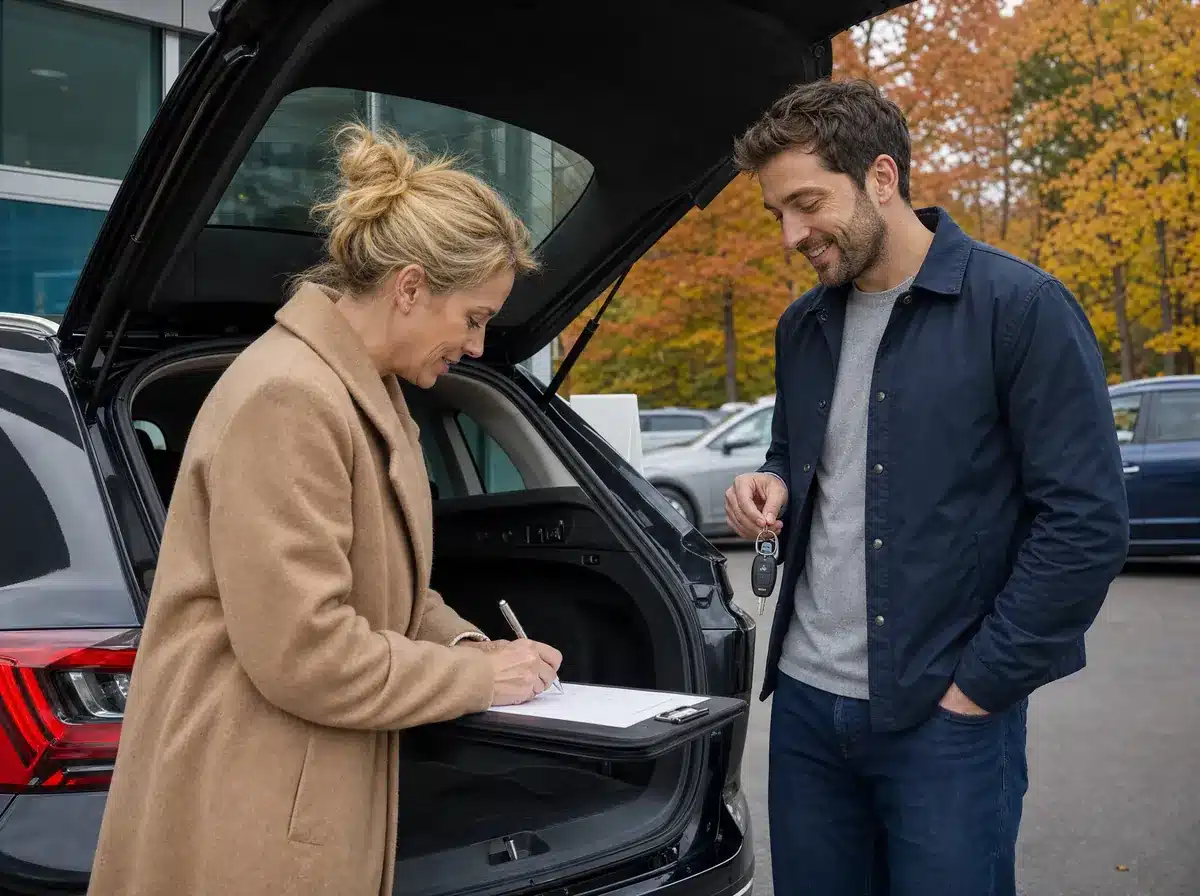
Vehicle titles and other state forms. Massachusetts itself does not usually require a notarized signature on a vehicle title, but many out-of-state titles, bills of sale and lien releases do, and private sellers often meet us in a driveway to sign before the buyer drives away. Bring the title and both parties’ IDs.
For a longer checklist, read how to prepare for a mobile notary visit.
Where does our traveling notary go in Massachusetts?
We travel to 177 cities and towns across Greater Boston, the Merrimack Valley, Central Massachusetts and the North Shore from our office at 1215 Main St in Tewksbury. The towns below are our most frequent destinations; each link opens a local page with that town’s zone, typical documents and nearby facilities.
The Merrimack Valley is home turf. Lowell, Dracut, Chelmsford, Billerica, Wilmington, Andover, Lawrence and Methuen are a short drive from Tewksbury, which is why same-day visits there are routine and why Lowell General and Lahey Burlington are among our most frequent bedside destinations.
Greater Boston makes up the largest share of Zone 3 trips: downtown and Back Bay law offices, Cambridge employers, Newton and Wellesley homes and the Longwood medical area. Central Massachusetts runs from Concord through Leominster, Fitchburg and Gardner to Worcester and UMass Memorial. The North Shore covers Lynn, Salem, Beverly and Gloucester on scheduled trips. If your town is not listed, the full service location index has all 177.

Why does a traveling notary beat driving to one?
A traveling notary saves the one thing a bank or shipping-store notary cannot give back: the hours spent finding one who is in, available and willing to take your document. For anyone who cannot easily leave a home, a hospital or an office, it is not a convenience but the only way the signing happens.
Time. Driving to a notary means finding a branch with a commissioned employee on duty, confirming they will take your document, parking in Boston or Cambridge and waiting for a desk. A traveling notary appointment is one call, a confirmed window and a signing that takes about 15 minutes once we sit down.
Mobility and health. A parent recovering from surgery, a spouse in rehab or a resident of a memory care unit cannot go to the notary. The notary has to come to them, and the document often cannot wait.
Multiple signers. A deed with three siblings on the title, a corporate resolution needing two officers, a trust packet with a trustee and a settlor: getting everyone into a branch lobby during business hours rarely works. One table at one home or office does.
Privacy. Estate plans, family affidavits and business contracts are read at a kitchen table or in a conference room, not at a counter beside the shipping line.
Documents branches refuse. Many bank notaries will not touch wills, trusts, powers of attorney or anything bound for another country. A traveling notary who handles those documents every week does not flinch at them, and will say plainly if one needs an attorney’s eye first.
Everything on hand. Seal, stamp, journal, loose certificates for a document that arrived without one, and a printer for the page that was never attached. If you are searching for a notary public near you, the nearest one with a fully stocked bag is usually the one already in the car.
Honest counterpoint: if you can walk into our Tewksbury office with one document and one ID, $45 beats $125 every time. The traveling rate earns its keep when leaving the house is hard, the deadline is tonight or the signing involves more people than a lobby can hold. Our complete Massachusetts mobile notary guide covers when each option makes sense.
Traveling notary FAQ
What is a traveling notary?
A traveling notary is a commissioned Massachusetts notary public who drives to your location to notarize documents instead of asking you to come to an office. It is the same service as a mobile notary; the notarization, the seal and the journal entry are identical to what you would get at a bank or law office.
Is a traveling notary the same as a mobile notary?
Yes. The two terms describe the same service: a notary who comes to you. People tend to search for a traveling notary when they want a home or hospital visit and for a mobile notary when they are thinking of loan signings, but we handle both under the same zone pricing.
How much does a traveling notary cost in Massachusetts?
Our travel rates start at $125 per visit in Zone 1 (Tewksbury, Gardner, Ashby and Athol), $179 in Zone 2 (Lowell, Andover, Worcester and 40+ nearby towns) and $250 in Zone 3 (Boston, Cambridge, Newton and 110+ more). Each rate includes travel, one notary seal and 15 minutes of service. Extra seals and time are quoted before we leave.
Can a traveling notary come to a hospital or nursing home?
Yes. We make bedside visits to hospitals, rehabilitation centers, skilled nursing facilities, assisted living residences, memory care units and hospice locations across Greater Boston, the Merrimack Valley and the North Shore. The patient must have valid photo ID, be able to say what they are signing and sign voluntarily. Hospital and nursing-home visits are included in Zone 3 pricing.
Do you bring witnesses?
No. We do not provide, supply or coordinate witnesses. If your document needs them, such as a Massachusetts health care proxy or a will, you arrange two adult witnesses who are not named in the document and have them present when we arrive.
Do you travel on weekends and in the evening?
Yes. We work seven days a week, with evening, weekend and same-day visits confirmed by phone or text before dispatch. Any after-hours premium is quoted up front so the price you hear is the price you pay.
What ID does the signer need for a traveling notary visit?
A current, unexpired government-issued photo ID such as a Massachusetts driver’s license, Mass ID, U.S. passport, passport card, military ID or permanent resident card. Under Massachusetts law an expired ID is not acceptable. If the signer has no ID with them, call us before the visit. Under M.G.L. c.222 s.1 the only alternatives are a credible witness who is personally known to the notary and who personally knows the signer, or the notary’s personal knowledge of the signer; we do not supply witnesses.
Can a traveling notary explain my document or tell me what to sign?
No. A notary public cannot give legal advice, draft documents or explain the legal effect of what you are signing. We verify identity, confirm willingness and awareness, witness the signature and complete the certificate. For questions about what the document does, speak with a Massachusetts attorney before the appointment.
Related: our Massachusetts notary public page explains the commission and the four notarial acts, and our loan signing agent page covers mortgage packages, where we act as the notary supporting your closing attorney, title company or lender.

1,190+ signings at homes, hospitals, care facilities and offices across Greater Boston and the Merrimack Valley. Background screened, bonded and E&O insured. Fluent in English, Arabic and French. About Hanson