
Hospital Notary Service in Boston, MA
Bedside hospital notary visits across Massachusetts: health care proxies, POAs and HIPAA forms at MGH, Brigham, Lahey, Lowell General and more, 7 days. Call (978) 424-4629.
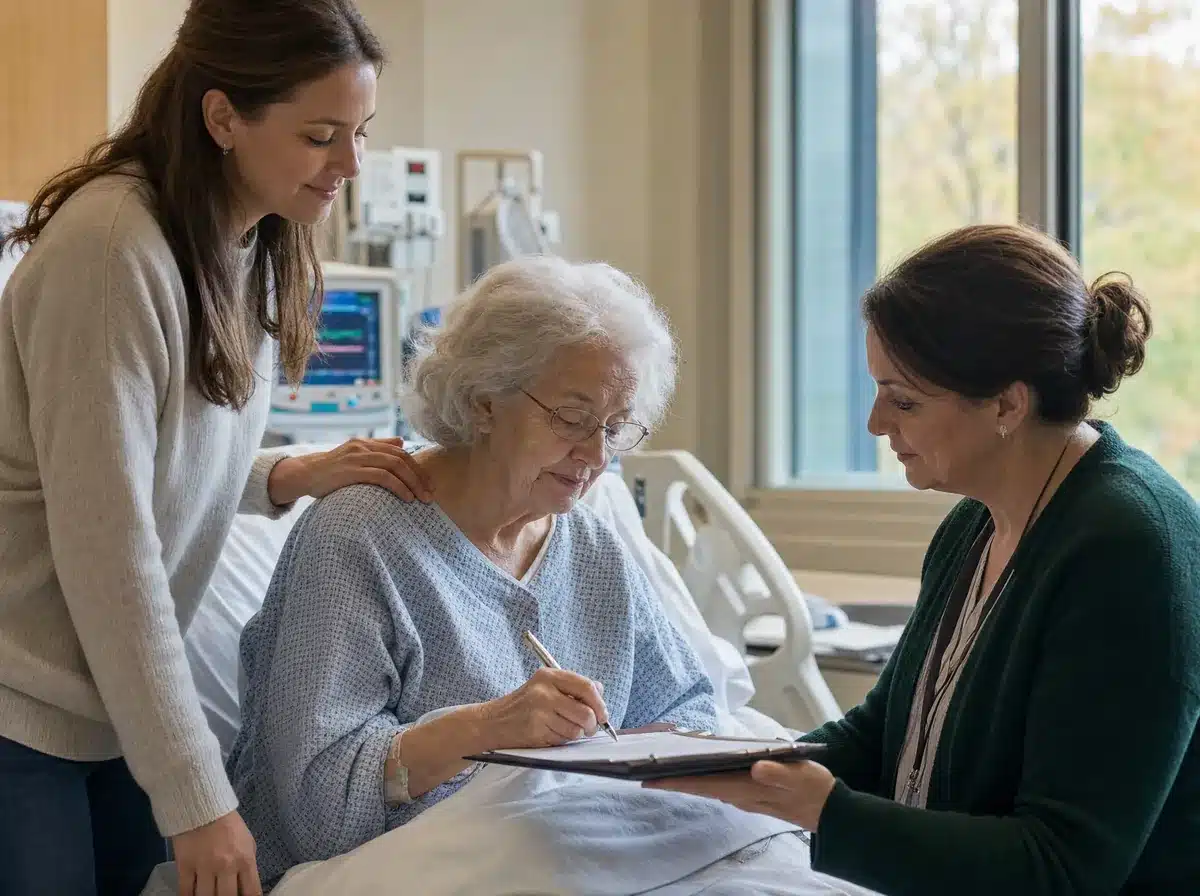
A bedside notarization is the same legal act as any other Massachusetts notarization: identification, willingness, awareness, certificate, journal. The difference is that everyone in the room knows the document matters today. Our hospital notary Boston service brings Hanson Webb to the patient’s room at Massachusetts General, Brigham and Women’s, Beth Israel Deaconess, Tufts Medical Center, Boston Medical Center, Dana-Farber, Spaulding Rehabilitation and the hospitals, skilled nursing facilities, memory care units and hospice houses of Greater Boston, the Merrimack Valley and the North Shore, to notarize health care proxies, durable powers of attorney, HIPAA authorizations, self-proving will affidavits, trust documents and affidavits. Hospital visits are quoted at booking; mobile visits elsewhere follow our zone fees from $125, $179 or $250 with travel included.
Hanson has been a Massachusetts Notary Public since 2007, is NNA certified, BBB A+ accredited and has completed more than 1,190 signings in English, Arabic and French. Call (978) 424-4629 or (978) 851-0199, or book a bedside visit online. This page is for the adult child driving back from work to a hospital floor, the social worker who discovered during discharge planning that the proxy was never signed, the elder law attorney whose client is suddenly inpatient, and the hospice nurse arranging a calm afternoon for a family arriving from out of state.
How does a hospital notary Boston bedside visit run?
We call the floor before we leave, confirm the patient’s ID on arrival, hold a short conversation with the patient about the documents with the named agent out of the room when possible, watch the signing, perform the acknowledgment or jurat each document calls for, record the acts and leave the floor as quietly as we arrived. A typical bedside visit takes 25 to 45 minutes from the elevator to the exit, and 15 to 25 minutes at the bedside itself.
- Pre-visit coordination. We phone the floor nurse, social worker or facility administrator to confirm visiting policy, room number, visitor list rules and whether a private space is available. We ask about the patient’s best hours and any scheduled procedures.
- Check-in. We sign in at the nursing station, wear identification and follow any screening the hospital requires. We wait for clinical care to finish rather than asking anyone to pause.
- Identification. The patient’s current government photo ID: driver’s license, Mass ID, passport, military ID, permanent resident card or foreign passport. A wristband is not ID. If the wallet is at home, a family member brings it before we start.
- Signer conversation. Short and calm: please tell me your name; what is this document; who are you appointing; are you doing this freely. We ask the named agent to step out for this part when we can.
- Signing. The patient signs first. For a health care proxy, the two adult witnesses the family arranged sign next, each stating the patient appeared of sound mind and under no constraint. We do not provide those witnesses.
- Certificate and journal. Acknowledgment on the POA, proxy (if requested), HIPAA release and trust documents; jurat on affidavits. Each certificate is completed in full under M.G.L. c.222 s.15 and sealed, and each act is journaled under M.G.L. c.222 s.22.
- Delivery. Originals to the family or attorney. A clean scan to the care team or attorney the same day on request, so the proxy is in the chart before the next shift.
Which Boston hospitals and facilities do we visit?
Every major Boston teaching hospital, the Longwood Medical Area, Charlestown rehabilitation and the community hospitals of the Merrimack Valley and North Shore. The list below is representative, not complete; if your facility is not on it, we almost certainly still serve it.
| Facility | Location | What we see most |
|---|---|---|
| Massachusetts General Hospital | 55 Fruit Street, Boston | Bedside visits across the Lunder, Ellison, White and Bigelow buildings; pre-surgical POAs and proxies |
| Brigham and Women’s Hospital | 75 Francis Street, Boston | Visits coordinated with case management and palliative care |
| Beth Israel Deaconess Medical Center | 330 Brookline Avenue, Boston | ICU, oncology and discharge-planning notarizations |
| Tufts Medical Center | 800 Washington Street, Boston | Floor visits arranged through the social work team |
| Boston Medical Center | One Boston Medical Center Place | Bedside POAs and proxies, often in Arabic or French |
| Dana-Farber Cancer Institute | 450 Brookline Avenue, Boston | Inpatient and infusion-floor visits paired with advance care planning |
| Spaulding Rehabilitation Hospital | 300 First Avenue, Charlestown | Long-stay rehabilitation patients after stroke or spinal injury |
| Lahey Hospital and Medical Center | 41 Mall Road, Burlington | One of our most visited campuses; same-day coordination with floor nursing |
| Winchester Hospital | 41 Highland Avenue, Winchester | Med-surg, oncology and rehab units |
| Lowell General Hospital | 295 Varnum Avenue, Lowell | Discharge-planning calls from the floor team |
| Lowell General, Saints Campus | 1 Hospital Drive, Lowell | Serving Tewksbury, Wilmington and South Lowell families |
| Holy Family Hospital | 70 East Street, Methuen | Social work and discharge-planning coordination |
| Lawrence General Hospital | 1 General Street, Lawrence | Bedside visits for Merrimack Valley families |
| Anna Jaques Hospital | 25 Highland Avenue, Newburyport | North Shore proxies and POAs |
| Beverly Hospital | 85 Herrick Street, Beverly | Routine North Shore bedside work |
| Salem Hospital | 81 Highland Avenue, Salem | Med-surg and palliative care units |
| Melrose-Wakefield Hospital | 585 Lebanon Street, Melrose | Coordinated through social work |
| Tewksbury Hospital | 365 East Street, Tewksbury | State-operated facility minutes from our office |
| D’Youville Life and Wellness | 981 Varnum Avenue, Lowell | Skilled nursing for Lowell-area families |
We also visit skilled nursing and assisted living networks across Middlesex, Essex and Suffolk counties, memory care floors, inpatient hospice units and hospice houses, and patients receiving hospice care at home. Send the facility name and address with your booking and we will confirm coverage. Our Boston mobile notary page covers the neighborhoods around the Longwood Medical Area, Charlestown and downtown.
Which documents do we notarize at the bedside?
Eight documents account for nearly every hospital call: the health care proxy, the durable power of attorney, the HIPAA authorization, the living will, the self-proving will affidavit, trustee certifications and trust documents, the emergency real estate POA and sworn affidavits. MOLST and DNR orders are not among them because they are clinician-signed medical orders.
| Document | Governing law | Notarial act | Witnesses (arranged by the family) |
|---|---|---|---|
| Health care proxy | M.G.L. c.201D | Acknowledgment, only when a facility or attorney requests it; the proxy is valid without a notary | Two adults, not the agent or alternate |
| Durable power of attorney | M.G.L. c.190B s.5-501 | Acknowledgment | None unless the form has lines |
| HIPAA authorization | Federal privacy rule; provider sets execution | Acknowledgment or signature witnessing when requested | None |
| Living will or personal directive | No Massachusetts statute; evidentiary | Acknowledgment | Often two, by the drafter’s design |
| Self-proving will affidavit | M.G.L. c.190B s.2-504 | Jurat; the will itself is witnessed, not notarized | The same two witnesses who signed the will |
| Trustee’s certificate, trust, deed into trust | M.G.L. c.184 s.35 and trust law | Acknowledgment | None |
| Emergency real estate POA | M.G.L. c.190B; drafted by the closing attorney | Acknowledgment | None unless the form has lines |
| Affidavits for court, probate or immigration | Court or agency rules | Jurat | None |
| MOLST, DNR, comfort care order | Clinical orders | None; signed by a physician, NP or PA | Not applicable |
Powers of attorney are covered in depth on our power of attorney notarization page, wills and trusts on our trust and will notary page, and the proxy on our health care proxy notarization guide. Massachusetts is an attorney-closing state; an emergency real estate POA is drafted by the closing attorney and we notarize the principal’s signature on it.
Capacity, willingness and the limits of a notary’s role
M.G.L. c.222 s.16 requires the notary to confirm the signer’s identity, willingness to sign and awareness of the act. A notary is not a physician, attorney or clinician and does not assess medical capacity, diagnose delirium or dementia, or opine on whether a patient has legal capacity to contract. Those judgments belong to the care team and, if contested, to the Probate and Family Court.
What we do at the table
Before we open the document, we have a short conversation with the patient. We ask the signer to introduce themselves, tell us what the document is, say who is being appointed as agent, trustee or proxy, and confirm they are signing voluntarily. We do this without the family member in the room when possible, especially when that family member is the named agent. If the signer can answer in their own words, we proceed.
When we stop
If the signer cannot name the document, cannot identify the agent, appears heavily sedated, or signs only when prompted, we stop. We tell the family politely, we do not perform or charge for the notarial act, and we leave. Families then typically choose a different time of day, since medication and lucidity windows matter, or, if capacity has truly closed, consult an elder law attorney about guardianship or conservatorship under M.G.L. c.190B. Because the trip was made, the travel portion of the visit fee quoted at booking still applies, so ask the charge nurse about alertness before you book.
Undue influence
Hospital rooms are full of people with an interest in the outcome. We watch for a patient who looks to a relative before every answer, a relative who answers for the patient, or a signer who is told what to say. Any of these ends the notarization. Attorneys appreciate this; it protects the documents they drafted from later challenge.
Who needs to be present, and what is each person’s role?
The patient must be present and awake. The two witnesses for a health care proxy or will must be present and are arranged by the family. The named agent may be present but should step out during the notary’s conversation with the patient. The attorney may attend in person or by phone. Nobody signs for the patient unless the attorney has planned for a directed signature in advance.
- The patient (principal, testator or affiant). Signs in the notary’s presence, with ID. Signs by mark if a full signature is not possible; the attorney should plan for this and the notary documents it.
- The named agent, proxy or trustee. Does not sign a Massachusetts POA or proxy and does not need to attend. Cannot witness the proxy. We prefer the agent out of the room during the signer conversation.
- Two witnesses for a proxy or will. Adults who are not the agent or alternate and, for a will, ideally not beneficiaries. Family friends, neighbors, colleagues, or facility staff if the facility permits it. You arrange them; we do not provide, supply, bring, coordinate or serve as witnesses.
- The attorney. Drafts the documents, sets the signing order and answers legal questions. Often joins by phone for bedside signings.
- The floor nurse or social worker. Confirms the patient is awake and able, manages room access and visitor rules, and tells us the best time. Staff participation as witnesses is a facility decision, never ours to request.
- The notary. Confirms identity, willingness and awareness; performs the acknowledgment or jurat; completes and seals the certificate; journals the act. Does not advise, draft or witness.
What ID does a hospitalized patient need?
A current, unexpired government-issued photo ID with signature. Massachusetts or out-of-state driver’s license, Mass ID, U.S. passport or passport card, military ID, permanent resident card or foreign passport all work. Hospital wristbands, insurance cards, Medicare cards and expired licenses do not satisfy M.G.L. c.222.
The most common bedside problem is a wallet at home. The fix is simple: a family member brings the ID before the signing starts. Massachusetts gives the notary very narrow alternatives to a government ID, and they rarely fit a hospital room, so do not count on them. If the license expired during a long admission, the RMV can issue a renewal or Mass ID; some families handle this the day before. For name changes and other edge cases, read what ID is accepted for notarization in Massachusetts.
How do we coordinate with social workers, discharge planners and hospice teams?
A large share of our hospital calls begin with a social worker, discharge planner or hospice coordinator who has identified a missing proxy or POA. We are used to working alongside floor teams and follow whatever access procedure each facility requires.
- We call ahead to confirm visiting policy and room access. Some floors use a designated visitor list; we work within it.
- We respect HIPAA and patient privacy. We discuss the patient only with the patient and the explicitly authorized representatives.
- We bring our own pens, notarial journal, loose certificates and a writing surface. We do not borrow hospital supplies or ask staff for copies.
- We work quickly when the patient’s energy is short. Most bedside signings take 15 to 25 minutes once we sit down.
- We provide a clean scan of the executed documents to the family, attorney or case manager the same day on request.
- We coordinate routinely with palliative care nurses, hospice intake teams and case management.
- We document every visit in the notarial journal with the same care as any other Massachusetts notarial act.
- We never ask staff to serve as witnesses. If the facility permits staff to witness and the family asks them, that is the family’s arrangement.
What should the family have ready before the notary arrives?
Five things make a bedside visit succeed: the documents complete and unsigned, the patient’s ID in the room, the two witnesses present if a proxy or will is being signed, the floor told that a notary is coming, and an honest read on the patient’s alertness at the planned hour. Have them in place and the signing itself is the easy part.
- All documents printed in full, every blank completed, no signatures yet. Bring the attorney’s signing instructions if there are several documents.
- The patient’s current photo ID, physically in the room.
- Two adult witnesses for a proxy or will, not the agent, with their own ID, able to stay for the whole signing. Arranged by you.
- The attorney’s phone number, in case a question comes up at the table.
- The nursing station or front desk notified, and any visitor list updated with the notary’s name.
- A quiet 30 minutes that does not collide with rounds, dialysis, therapy or a procedure.
How much does a hospital notary visit cost in Boston and Massachusetts?
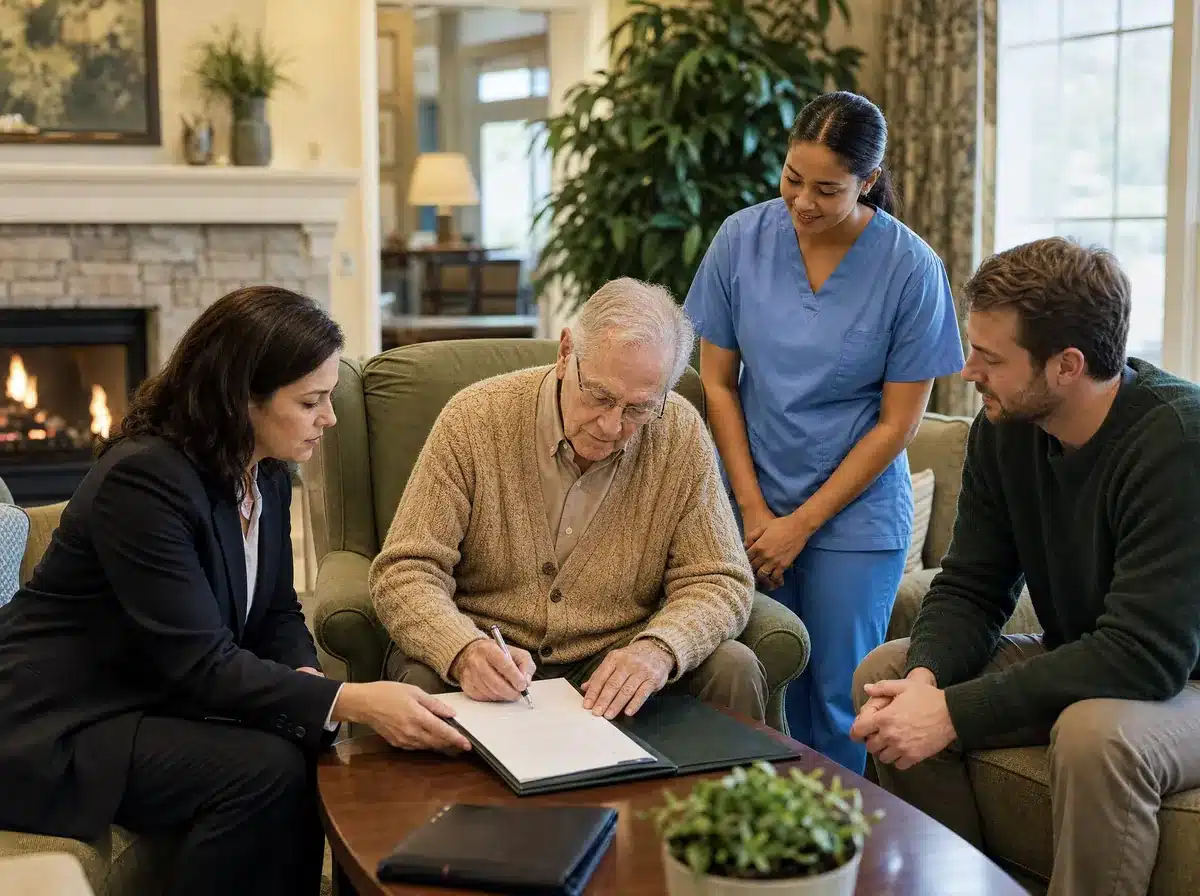
Hospital, nursing home, rehabilitation and hospice visits are quoted at booking based on the facility’s address, the number of documents and the coordination the visit requires, and they are confirmed and paid before we depart. Home visits follow our zone fees with travel, one seal and 15 minutes included: from $125 in Zone 1 (Tewksbury, Gardner, Ashby, Athol), from $179 in Zone 2 (Lowell, Billerica, Andover, Chelmsford, Dracut, Lawrence, Worcester, Fitchburg, Leominster, Concord, Burlington, Woburn and 40 more towns) and from $250 in Zone 3 (Boston, Cambridge, Newton, Lexington, Wellesley, Weston, Lynn, Gloucester, North Andover and 110 more). In-office acts at 1215 Main St, Suite 115, Tewksbury are $45 each.
| Visit type | Description | Fee |
|---|---|---|
| Bedside, single document | Proxy, POA, HIPAA release or one affidavit at a hospital, skilled nursing facility or hospice | Quoted at booking; the facility’s zone sets the base |
| Bedside, estate plan packet | POA, proxy, HIPAA, self-proving will affidavit, trustee’s certificate at one visit | Quoted by document count before we leave the office |
| Evening, weekend or same-day | Available by confirmation, seven days a week | Quoted at booking |
| Home visit after discharge | Standard mobile visit | Zone fee: from $125, $179 or $250 |
| In-office, Tewksbury | When a family member can come to us | $45 per notarial act |
| Attorney and firm engagements | Elder law and estate planning practices with established billing | Quoted; direct billing available |
Zone is set by where the signing happens, not where the family lives. Lahey Burlington, Lowell General, Tewksbury Hospital and the Saints campus are close to our office; the Boston cluster is a longer drive and priced accordingly. If the signing cannot proceed after we arrive, there is no charge for a notarial act that was not performed, but the travel portion of the quoted visit fee is not refunded. We tell you the full amount before we accept the booking.
Common bedside scenarios in Boston hospitals
These are the situations that produce most hospital notary calls, and how each one typically runs.
- Discharge planner finds a missing proxy. A patient at Beth Israel is leaving for a skilled nursing facility in two days and never signed a proxy. The social worker calls; the family brings two friends as witnesses; we execute the proxy and HIPAA release that afternoon and scan them to the case manager.
- Pre-surgical signing at MGH. The family wants a POA and proxy signed before a major operation. We coordinate with the pre-op nurse and finish before sedation begins.
- Hospice intake. A patient is admitted to inpatient hospice and the directive packet is incomplete. The attorney emails the documents; we meet the family and their witnesses at the hospice house; the MOLST is handled by the hospice physician.
- Out-of-state family arriving. Adult children flying into Logan need a POA executed before they can manage a parent’s banking and real estate. We schedule around their arrival and the parent’s best hours.
- Bedside estate plan completion. An elder law attorney drafts a full packet: POA, proxy, HIPAA, will, trust. We execute it at Dana-Farber with the attorney on the phone and the family’s two witnesses in the room.
- Emergency real estate POA. A closing is scheduled and the borrower is unexpectedly admitted to Tufts. The closing attorney drafts a transaction-limited POA; we notarize it at the bedside so the spouse can close.
- Memory care, lucidity window. A resident in Andover is sharp in the morning and confused by afternoon. We schedule for 9 a.m. If awareness is unclear at the table, we decline and the family consults counsel about guardianship.
- Wallet at home. No ID at the hospital. A daughter drives home for the license and we begin when she returns.
- Capacity has closed. The patient cannot identify the document or the agent. We decline politely, do not charge for the act, and the family pursues a guardianship petition.
A notary cannot give legal, medical or clinical advice, draft documents or judge capacity. Hire Mobile Notary and Neighborhood Parcel are not a law firm, and Hanson Webb is not an attorney or clinician. For elder law and estate planning questions, consult a licensed Massachusetts attorney before signing. Our office is at 1215 Main St, Suite 115, Tewksbury, MA 01876, and we serve 177 Massachusetts cities and towns.
Frequently asked questions
Do you do bedside notarizations at Boston hospitals?
Yes. Our hospital notary Boston service covers Massachusetts General, Brigham and Women’s, Beth Israel Deaconess, Tufts Medical Center, Boston Medical Center, Dana-Farber and Spaulding Rehabilitation, plus Lahey Burlington, Lowell General, Winchester, Tewksbury Hospital and the skilled nursing, memory care and hospice facilities of Greater Boston, the Merrimack Valley and the North Shore. Visits are quoted at booking and confirmed with the floor before we leave.
What documents do you typically notarize at the bedside?
Health care proxies under M.G.L. c.201D (when a notary is requested), durable powers of attorney under M.G.L. c.190B, HIPAA authorizations, living wills, self-proving will affidavits under c.190B s.2-504, trustee certifications and trust documents, emergency real estate POAs and sworn affidavits. MOLST and DNR orders are clinician-signed medical orders and are not notarized.
How quickly can you get to the hospital?
Same-day visits are routine when scheduling permits, seven days a week, with evening and weekend visits by confirmation. Tewksbury Hospital, Lowell General and Lahey Burlington are minutes from our office; the Boston hospitals are roughly 35 to 50 minutes outside rush hour. Tell us the patient’s best hours and we schedule around them.
Can you notarize for a patient who cannot hold a pen?
A patient who cannot write a full signature can usually sign by mark, and the notary documents how the mark was made and witnessed. The patient must still be awake, aware of the document and willing. If the attorney anticipates a directed signature by another person, that must be planned in the document in advance; ask the attorney before the visit.
What if the patient has no photo ID at the hospital?
A family member brings the ID from home before the signing starts; this is the fix we recommend. A hospital wristband, insurance card or expired license is not acceptable under M.G.L. c.222. Massachusetts allows very narrow alternatives to a government ID and they rarely fit a hospital setting, so plan on the physical document.
Can a notary determine whether the patient has capacity?
No. A notary is not a clinician and does not assess medical or legal capacity. Under M.G.L. c.222 s.16 we confirm identification, willingness and awareness of the document. If the patient cannot name the document or the agent, we decline the notarial act without charging for it, and the family typically consults an elder law attorney about guardianship.
Do you provide the two witnesses for a health care proxy or will?
No. We do not provide, supply, bring, coordinate or serve as witnesses. The family arranges two adults who are not the named agent or alternate (and, for a will, ideally not beneficiaries). Ask the charge nurse whether staff may witness; many hospitals restrict it. We perform the notarial acts only.
Do you coordinate with social workers and discharge planners?
Yes. Hospital social workers, discharge planners, case managers and palliative care nurses are frequent points of contact, and many bedside visits begin with their call. We respect HIPAA, hospital security and visiting policies, confirm room access in advance and send a scan of the executed documents to the care team the same day when asked.
Do you visit hospice and palliative care facilities?
Yes. Inpatient hospice units, hospice houses and patients receiving hospice care at home across Massachusetts are routine destinations. We coordinate with the hospice intake nurse, keep the visit brief and calm, and leave MOLST and comfort care orders to the hospice physician.
What does a hospital notary visit cost?
Hospital, nursing home and hospice visits are quoted at booking based on the facility’s address, the number of documents and the coordination required, and are confirmed and paid before we depart. Home visits follow our zone fees from $125, $179 or $250 with travel included, and in-office acts in Tewksbury are $45 each. If the signing cannot proceed, there is no charge for the notarial act, but the travel portion of the visit is not refunded.

1,190+ signings across Greater Boston and the Merrimack Valley. Fluent in English, Arabic and French. About Hanson