
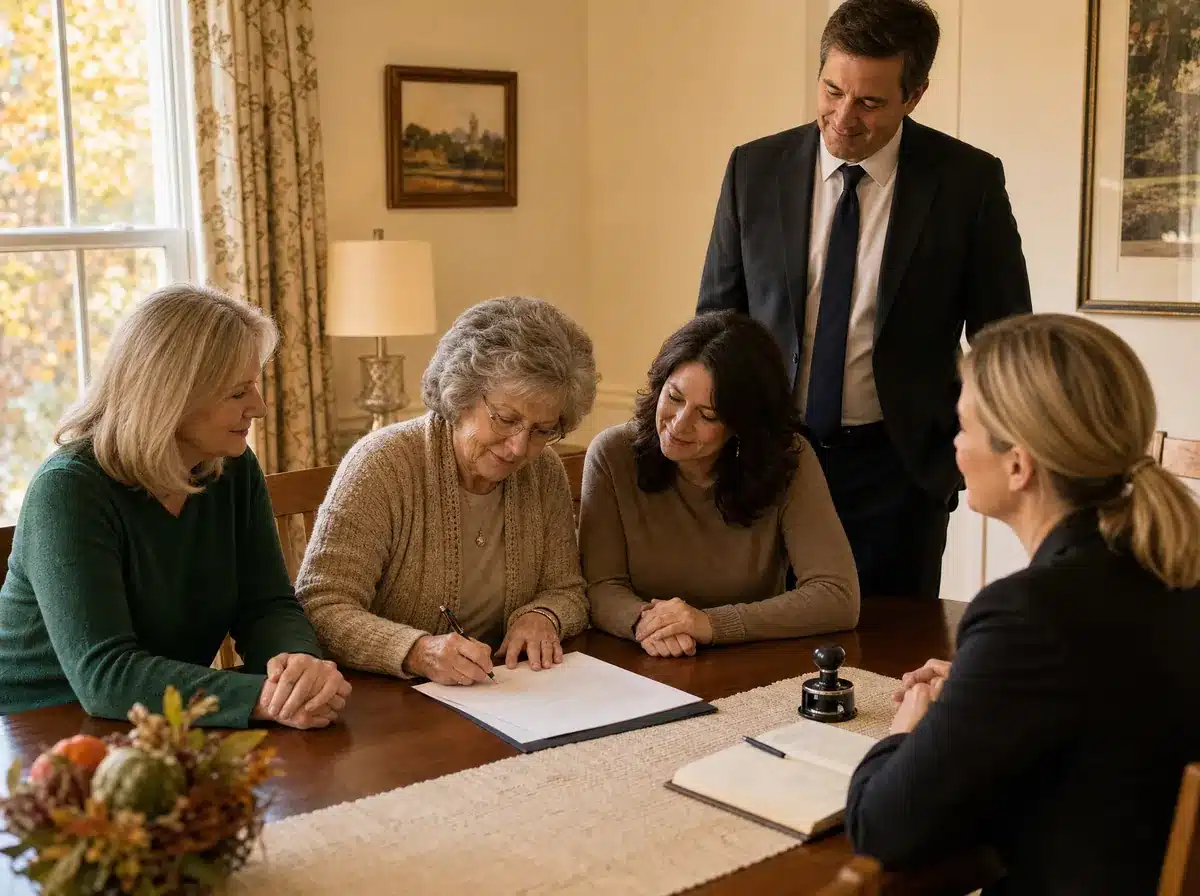
Signature Witness Notary in Massachusetts
Licensed mobile notary for signature witnessing across Massachusetts. DS-3053 passport consent, travel letters, deeds, POA, healthcare proxies, RMV forms & more. Same-day mobile, 7 days. Reviewed by James Lumas. M.G.L. c.222 §15(d) compliant. (978) 424-4629.
Signature witnessing is a notarial act in which a Massachusetts notary public watches you sign a document, identifies you from satisfactory evidence and certifies that the signature was made in the notary’s presence. Our signature witness notary Massachusetts service performs that act at your home, office or hospital room, or in our office at 1215 Main St, Suite 115, Tewksbury, MA 01876, for passport consent forms such as DS-3053, travel letters, deeds, powers of attorney, business documents and any form that says “sign in the presence of a notary.” Mobile visits follow our zone fees, from $125, $179 or $250 with travel included; in-office acts are $45 each.
One clarification before anything else. Signature witnessing is something the notary does to your signature. It is not the same as the document witnesses that wills, health care proxies and some out-of-state forms require. Hire Mobile Notary does not provide, supply, bring, coordinate or serve as witnesses for any document; if your form needs them, you arrange them. What we do is the notarial act described on this page. Hanson Webb has performed it more than 1,190 times since 2007, in English, Arabic and French. Call (978) 424-4629 or (978) 851-0199, or book online.
What is signature witnessing under Massachusetts law?
Under M.G.L. c.222, signature witnessing is a notarial act in which the signer appears in person before the notary, is identified through satisfactory evidence of identity, and signs the document while the notary watches. No oath is administered. The notary then completes a certificate stating that the person appeared, was identified and signed in the notary’s presence.
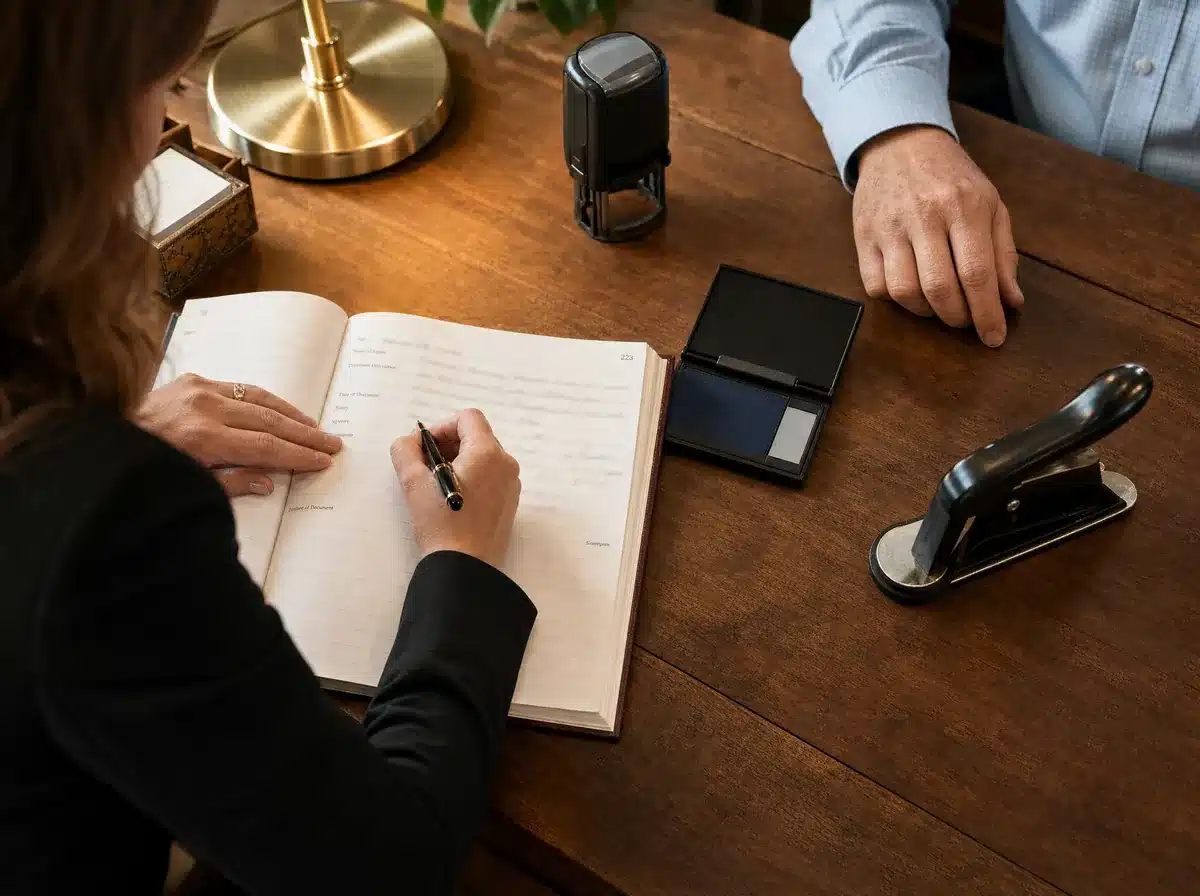
Massachusetts recognizes four principal notarial acts: the acknowledgment, the jurat (oath or affirmation), the signature witnessing and the copy certification. Each has its own certificate form in M.G.L. c.222 s.15, and the notary must perform the act the document calls for. M.G.L. c.222 s.16 governs how the notary conducts it: identify the signer, confirm the signer is acting willingly and understands the nature of the document, complete every element of the certificate, and record the act in the journal.
The statutory certificate for a signature witnessing reads, in substance: “On this ____ day of ________, 20__, before me, the undersigned notary public, [name of signer] personally appeared, proved to me through satisfactory evidence of identification, which were ________, to be the person whose name is signed on the preceding or attached document in my presence.” That is the language Hanson completes, signs and seals.
Why does this act exist alongside the acknowledgment? Because some receiving parties want proof that the notary saw the pen touch the paper, not merely that the signer later admitted the signature was theirs. Federal passport consent forms, many foreign-bound documents and a growing number of institutional forms specify it for that reason.
Signature witnessing vs. acknowledgment vs. jurat: which one does your document need?
Read the certificate printed on your document. If it says “signed in my presence” with no oath, you need a signature witnessing. If it says “acknowledged … that he or she signed it voluntarily,” you need an acknowledgment. If it says “subscribed and sworn to before me,” you need a jurat. If there is no certificate, the receiving party decides and the notary attaches the matching Massachusetts form.
| Element | Signature witnessing | Acknowledgment | Jurat |
|---|---|---|---|
| Must the notary see you sign? | Yes | No; you may sign earlier and acknowledge it | Yes |
| Oath or affirmation | No | No | Yes |
| What the notary certifies | Identity and that the signature was made in the notary’s presence | Identity and that you declared the signature yours and voluntary | Identity, oath and signature in the notary’s presence |
| Arrive with document signed? | No | Either way | No |
| Typical documents | DS-3053 passport consent, travel consent letters, forms that say “in the presence of a notary,” many foreign forms | Deeds, mortgages, powers of attorney, trusts, contracts | Affidavits, sworn statements, verifications |
| Statute | M.G.L. c.222 s.15 | M.G.L. c.222 s.15 | M.G.L. c.222 s.15 |
A notary cannot pick the act for you or convert one into another after the fact. If you arrive with a pre-signed document that calls for a signature witnessing, the honest options are to sign a fresh copy in front of the notary or to ask the receiving party whether an acknowledgment will do. The long version of this comparison is in our guide to acknowledgment vs. jurat in Massachusetts, and sworn documents have their own page on affidavit and sworn statement notarization.
Signature witnessing and document witnesses are different things
People search for “signature witness notary” for two different reasons. Some need the notarial act above. Others need two adults to sign as witnesses to a will under M.G.L. c.190B or a health care proxy under M.G.L. c.201D, and hope a notary can be one of them. We perform the notarial act only. We never act as a document witness, and we do not bring, arrange or coordinate witnesses for you. If your document has witness lines, bring the people who will sign them, with their ID, and we will notarize whatever notarial certificate the document carries.
Which documents commonly require a signature witnessing?
Federal passport consent forms, travel consents for minors, institutional forms that specify “in the presence of a notary,” many documents bound for other countries, and certain business, lending and benefits forms. Below are the categories we see most across Boston, Cambridge, Lowell, Andover and Worcester.
Travel and passport documents
- DS-3053, Statement of Consent. Required when one parent or guardian cannot appear with a child under 16 applying for a U.S. passport. The absent parent signs before a notary. This is our most requested signature witnessing and has its own section below.
- Child travel consent letters. A parent authorizes a child to travel abroad with one parent, a relative, a school group or alone. Airlines and border officers abroad frequently ask that the signature be notarized.
- Airline and cruise unaccompanied minor forms. Carrier-specific consents that request a notarized parent signature.
- Consent for a minor’s medical treatment while traveling. Often paired with the travel letter so a grandparent or chaperone can authorize care.
Form DS-11, the passport application itself, is not notarized. It is signed in front of a passport acceptance agent at a post office, clerk’s office or passport agency. Bring the notarized DS-3053 to that appointment.
Family and guardianship documents
- Temporary guardianship or caregiver authorization letters allowing another adult to care for a child
- School enrollment and residency authorizations from a non-parent guardian
- Parenting plan and custody agreement signature pages when the court or attorney asks for notarized execution
- Adoption consents and relinquishments, which are usually executed with the family’s attorney present
Real estate and property
- Quitclaim and warranty deeds, trustee’s certificates and mortgage documents bound for a Massachusetts Registry of Deeds (these normally carry an acknowledgment, but lenders and foreign buyers sometimes require a witnessed signature as well)
- Residential and commercial leases where the landlord requires a notarized tenant signature
- Subordination, non-disturbance and estoppel agreements requested by lenders
Massachusetts is an attorney-closing state. We notarize the signatures the closing attorney, title company or lender puts in front of the signer; the attorney remains responsible for the closing itself.
Legal and estate documents
- Durable powers of attorney under M.G.L. c.190B, usually acknowledged, but some banks and foreign institutions require a witnessed signature. See our power of attorney notarization page.
- Health care proxies under M.G.L. c.201D. The proxy requires two adult witnesses whom the signer arranges; notarization is optional and is added only when a facility or attorney asks.
- Self-proving will affidavits under M.G.L. c.190B s.2-504, sworn by the testator and the family’s two witnesses before the notary. The will itself is witnessed by those two people, not notarized.
- Trust agreements, trust amendments and trustee certifications.
- Settlement agreements and releases where the parties want proof of in-person execution.
Business and corporate documents
- Corporate resolutions and officer’s certificates
- LLC operating agreements and membership interest assignments
- Non-compete, confidentiality and employment agreements when an employer requests notarized execution
- Asset and stock purchase agreement signature pages
- Bank signature cards and account resolutions for foreign-owned entities
Government and benefits forms
- Vehicle lien releases and out-of-state title documents when the receiving registry requires a notarized signature
- Pension, annuity and retirement plan election forms that specify “in the presence of a notary” (spousal consent forms are the most common)
- Vital records release authorizations and consular forms
Massachusetts RMV title transfers generally do not require a notary. If you are unsure whether your form needs one, read the signature block: if it has a place for a notary’s seal, it does.
How do you get Form DS-3053 notarized in Massachusetts?
Download the current form from travel.state.gov, complete the child’s and the applying parent’s information, leave the signature section blank, bring your photo ID and a photocopy of its front and back, sign in front of the notary, and submit the notarized form with the child’s passport application within 90 days. That is the whole process, and every step matters.
- Use the current form. The State Department revises DS-3053 periodically. Download it from travel.state.gov the week you plan to sign. An outdated edition is a common reason for rejection.
- Complete the information sections. Child’s name and date of birth, the applying parent’s or guardian’s name, and your own consent statement. Print legibly in black ink or type into the PDF.
- Do not sign. The consenting parent’s signature must be made in the notary’s presence. A pre-signed form cannot be notarized as a signature witnessing and will be refused by the passport agency.
- Photocopy your ID. The passport agency requires a clear photocopy of the front and back of the ID you show the notary. The copy itself is not notarized. Bring it with you.
- Appear before the notary with ID and the unsigned form. Mobile or in Tewksbury. Hanson checks the ID against the name on the form, watches you sign, completes the notarial certificate with seal and commission expiration date, and records the act.
- Submit within 90 days. A notarized DS-3053 is valid for 90 days from the date it was signed. If the passport application is not submitted in that window, a new form must be signed and notarized.
DS-3053 errors that delay a child’s passport
- Pre-signed form (the most common)
- Notarization more than 90 days old at the time of application
- Missing photocopy of the consenting parent’s ID, front and back
- Old form version
- Name on the form does not match the name on the ID (nicknames, dropped middle names, missing suffixes)
- Incomplete notarial certificate: seal with no signature, no commission date, or no statement of how the signer was identified
- Consent signed by someone without legal authority, for example a stepparent without a court order
If the other parent cannot be located, is unavailable or refuses to sign, the applying parent files Form DS-5525, Statement of Exigent or Special Family Circumstances, or a court order instead. DS-5525 is not notarized. Questions about eligibility belong to the U.S. Department of State, not a notary.
DS-3053 for parents abroad or in the military
A parent outside the United States signs the DS-3053 before a U.S. consular officer or, in many countries, a local notary whose act is then apostilled. Service members can sign before a military notary. If the absent parent is in Massachusetts and the applying parent is elsewhere, we notarize here and you ship the original; the agency needs the signed original, not a scan.
How does a signature witnessing appointment work?
You book, you bring the unsigned document and your ID, the notary identifies you, you sign while the notary watches, and the notary completes and seals the certificate. A single-document signature witnessing takes about 10 minutes once we sit down.
- Book. Call (978) 424-4629, the office at (978) 851-0199, or book online. Tell us the document, the number of signers and where you are. Check your town on our notary zones page for the mobile fee.
- Prepare the document. All fields complete, all pages present, signature line blank. If the form has lines for document witnesses, arrange those people yourself and have them present with ID.
- Identity verification. Current government-issued photo ID with your signature. The notary records the type of ID in the journal, as M.G.L. c.222 s.22 requires.
- Willingness and awareness. A brief exchange: what is this document, are you signing it freely. If a signer appears confused, pressured or unaware of what the document is, the notary stops.
- You sign. In the notary’s view, with your usual signature, in the name shown on your ID.
- Certificate and seal. Hanson completes the signature witnessing certificate, signs it exactly as commissioned, prints his name, adds the commission expiration date and applies the seal.
- Delivery. You keep the original. If the document is going overseas, ask about adding an apostille from the Secretary of the Commonwealth.
When more than one person signs
Every signer whose signature is being witnessed must appear in person with ID. If a document needs two signatures and one person is at home in Newton while the other is at an office in Burlington, that is two visits or one visit where both are present. Each signer’s signature witnessing is a separate notarial act with its own certificate line and seal.
What ID and preparation does a signature witnessing require?
A current, unexpired government-issued photo ID bearing your signature, a complete and unsigned document, and the presence of every person whose signature is being witnessed. The name on the ID must match the name you sign.
| Identification | Accepted? |
|---|---|
| Massachusetts driver’s license or Mass ID card | Yes |
| Driver’s license or ID card from another U.S. state | Yes |
| U.S. passport or passport card | Yes |
| U.S. military ID | Yes |
| Permanent resident card | Yes |
| Foreign passport with photo and signature | Yes |
| Foreign driver’s license alone | Generally not sufficient; bring a passport |
| Expired ID | No |
| Student ID, employee badge, Social Security card | No |
M.G.L. c.222 defines satisfactory evidence of identity as a current government document with photograph and signature. Edge cases, name changes and what to do when an ID is at home are covered in what ID is accepted for notarization in Massachusetts.
Preparation checklist
- Document complete, no blanks, all pages and exhibits attached
- Signature line unsigned
- Photo ID current and matching the name on the document
- For DS-3053: photocopy of ID front and back
- All signers present, or separate appointments scheduled
- Any document witnesses the form requires, arranged by you and present with their own ID
- Payment: card, Apple Pay, Zelle, PayPal or cash
How much does a signature witness notary Massachusetts visit cost?
In our Tewksbury office, a signature witnessing is $45 per notarial act. A mobile visit is priced by zone with travel, one notary seal and 15 minutes of service included: from $125 in Zone 1 (Tewksbury, Gardner, Ashby, Athol), from $179 in Zone 2 (Lowell, Billerica, Andover, Chelmsford, Dracut, Lawrence, Worcester, Fitchburg, Leominster, Concord, Burlington, Woburn and 40 more towns) and from $250 in Zone 3 (Boston, Cambridge, Newton, Lexington, Wellesley, Weston, Lynn, Gloucester, North Andover and 110 more).
| Service | Fee | Notes |
|---|---|---|
| In-office signature witnessing, Tewksbury | $45 per notarial act | By appointment, Monday through Friday |
| Mobile visit, Zone 1 | From $125 | Travel, one seal, 15 minutes included |
| Mobile visit, Zone 2 | From $179 | Travel, one seal, 15 minutes included |
| Mobile visit, Zone 3 | From $250 | Travel, one seal, 15 minutes included |
| Hospital or care facility visit | Quoted at booking | Zone fee plus coordination the visit requires |
| Additional signers or documents | Quoted up front | Each additional seal and extra time |
A DS-3053 is one notarial act. A couple each signing a travel consent is two. We confirm the total before the appointment and do not add charges afterward. Same-day and evening visits are available by confirmation, seven days a week.
Who books a signature witness notary in Massachusetts?
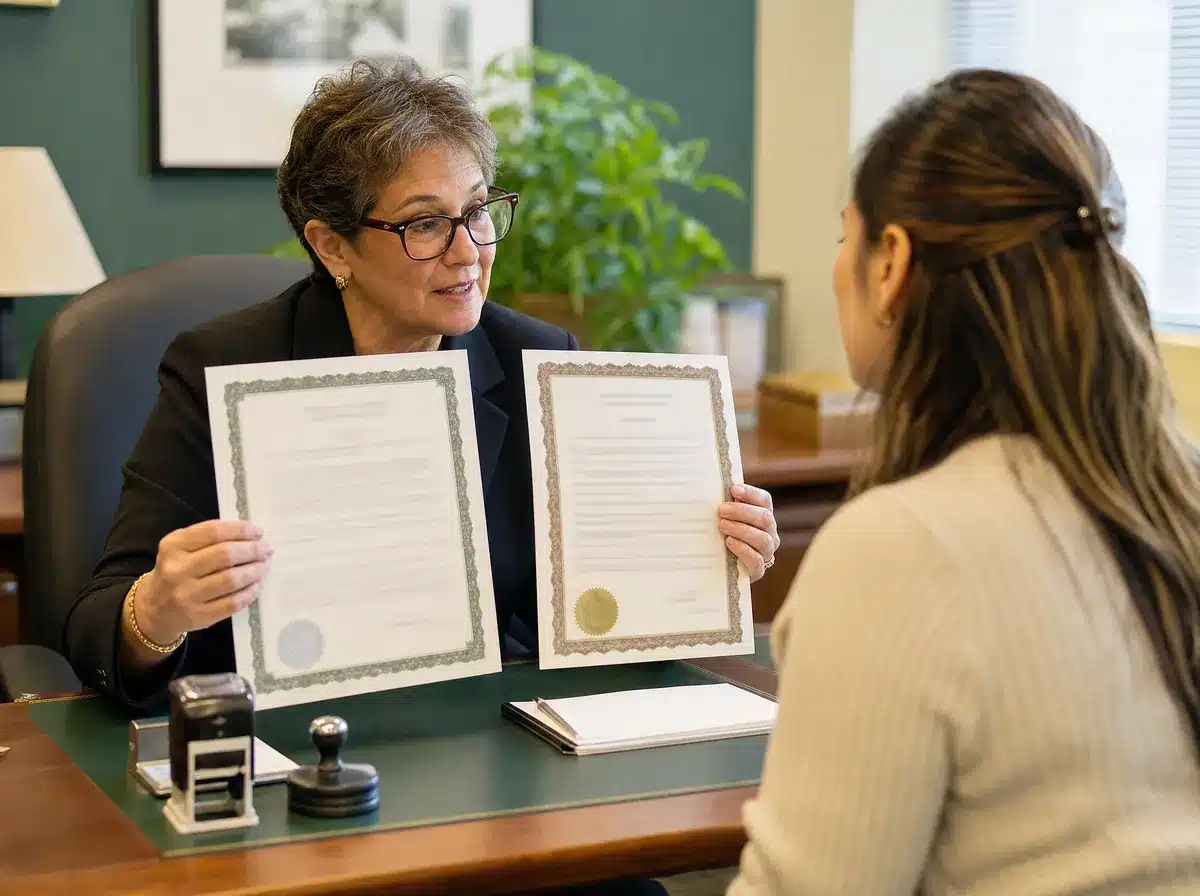
Parents handling a child’s passport, families planning international travel, attorneys and estate planning clients, and businesses and HR departments make up most of our signature witnessing work. Each group has a slightly different need.
- Parents applying for a child’s passport. One parent is traveling for work, deployed, or lives in another town. We come to that parent in Dorchester, Somerville or Lawrence, often the same day, so the DS-3053 is ready for the acceptance appointment.
- Families planning international travel. Travel consent letters for a child flying to visit grandparents in Morocco, a school trip to France or a summer in Lebanon, in English with an Arabic or French version when the destination asks for one.
- Attorneys and estate planning clients. Powers of attorney, self-proving will affidavits, trust documents and settlement agreements signed at the client’s home or bedside when the client cannot come to the office. The family brings any witnesses the documents require; we perform the notarial acts.
- Businesses and HR departments. Resolutions, operating agreements, employment agreements and signature cards, executed on site in Woburn, Burlington or downtown Boston on a deadline.
Which mistakes invalidate a signature witnessing?
Signing early, signing in a different name than the ID shows, missing signers and incomplete certificates account for nearly every rejected signature witnessing we have seen. All of them are avoidable.
- Signing before the notary arrives. The notary cannot certify what was not seen. Print a fresh copy.
- Signing a name that does not match the ID. Sign as your ID reads. If the document uses a different version of your name, correct the document or bring proof of the name change.
- One signer missing. Each signature must be made in the notary’s presence. Schedule both people or two appointments.
- Blank fields. A document with blanks can be altered later; the notary will ask you to complete or strike them first.
- Requesting the wrong act. If the receiving party wants a jurat, a signature witnessing will not do. Read the certificate or ask them.
- Expecting the notary to be a document witness. Massachusetts wills and health care proxies need two adult witnesses. We do not serve as or provide them. Bring your own.
- Altering the document after sealing. Any change after notarization voids it. Start over with a clean copy.
A notary cannot give legal advice, draft your document or explain its legal effect. If you are unsure whether a form needs a signature witnessing, an acknowledgment or a jurat, ask the party who will receive it, or consult a Massachusetts attorney. Hire Mobile Notary is a service of Neighborhood Parcel, 1215 Main St, Suite 115, Tewksbury, MA 01876, serving 177 Massachusetts cities and towns.
Frequently asked questions
What is signature witness notarization in Massachusetts?
Under M.G.L. c.222, a signature witnessing is a notarial act in which the notary identifies you through satisfactory evidence, watches you sign the document and certifies that the signature was made in the notary’s presence. No oath is administered, which is what distinguishes it from a jurat. The notary completes the statutory certificate and applies the official seal.
Can I sign the document before the notary arrives?
No. A signature witnessing requires the notary to see you sign. If you pre-sign, the notary can only perform an acknowledgment, and documents such as DS-3053 specifically require a witnessed signature. Arrive with the document complete but unsigned.
Does a signature witness notary Massachusetts service provide witnesses for my will or health care proxy?
No. A signature witness notary Massachusetts appointment is the notarial act of watching and certifying your signature. It is not the two adult witnesses that a will under M.G.L. c.190B or a health care proxy under M.G.L. c.201D requires. We do not provide, supply, bring, coordinate or serve as witnesses. You arrange them and bring them with ID; we perform the notarial act on whatever certificate the document carries.
What is the difference between a signature witnessing and an acknowledgment?
In a signature witnessing you sign in front of the notary, who certifies that fact. In an acknowledgment you may have signed earlier and you appear to confirm the signature is yours and was voluntary. Deeds and powers of attorney in Massachusetts usually take acknowledgments. DS-3053 and forms that say “sign in the presence of a notary” take signature witnessings.
How quickly can you notarize a DS-3053 for a child's passport?
Same-day appointments are available by confirmation across Greater Boston and the Merrimack Valley, seven days a week. Download the current form from travel.state.gov, complete the information sections, leave the signature blank, and bring your ID with a photocopy of its front and back. The notarized form is valid for 90 days.
What ID is required for a signature witnessing?
A current, unexpired government-issued photo ID with your signature: a Massachusetts or out-of-state driver’s license, state ID, U.S. passport or passport card, military ID, permanent resident card or foreign passport. Expired IDs are not accepted. The name on the ID must match the name you sign.
How much does a signature witnessing cost?
In our Tewksbury office, $45 per notarial act. Mobile visits are from $125 in Zone 1, $179 in Zone 2 and $250 in Zone 3, with travel, one seal and 15 minutes included. Hospital and facility visits are quoted at booking. Each signer’s signature is a separate act, and we confirm the total before we start.
Can two people sign the same document at one appointment?
Yes, as long as both appear in person with valid ID and sign in the notary’s presence. Each signature is a separate notarial act with its own certificate. If the signers are in different places, we schedule separate visits or they come together to the Tewksbury office.
Does Form DS-11 need to be notarized too?
No. The passport application itself, DS-11, is signed in front of a passport acceptance agent at a post office, clerk’s office or passport agency. Only the absent parent’s DS-3053 consent is notarized. Bring the notarized DS-3053 and the ID photocopy to the acceptance appointment.
Can a signature witnessing be done in Arabic or French?
Yes. Hanson Webb is fluent in English, Arabic and French and can confirm that you understand the document in your language before you sign. The notarial certificate is completed in English. Documents bound for Morocco, Lebanon, France or other countries can then be apostilled through the Massachusetts Secretary of the Commonwealth.

1,190+ signings across Greater Boston and the Merrimack Valley. Fluent in English, Arabic and French. About Hanson