

What Are Mobile Notary Services and How Do They Work?
A mobile notary is a commissioned notary public who travels to the signer instead of the other way around. This guide explains what the service is, what happens at the appointment, what the notary checks before sealing anything, and what a visit costs across Massachusetts.
What are mobile notary services?
Mobile notary services are notarizations performed by a commissioned notary public who travels to the signer’s location rather than working from a fixed desk. A mobile notary in Massachusetts holds the same commission and performs the same notarial acts as a notary at a bank or law office; the only difference is where the work happens.
A Massachusetts notary public is commissioned by the Governor under M.G.L. c.222 and bound by the standards of conduct in sections 16 and 22 of that chapter, which govern every notarization. There is no separate “mobile notary” license. The mobile notary simply runs a traveling practice, carries a seal and journal in a bag instead of a drawer, and schedules visits around the client’s life.
The acts a mobile notary performs are listed under M.G.L. c.222 s.15: acknowledgments, jurats (oaths and affirmations on a sworn document), signature witnessing and copy certification. Which one your document needs is decided by the certificate wording on the form, not by the notary; our guide to acknowledgments vs jurats in Massachusetts explains the difference.
One point worth stating at the outset. A notary who is not an attorney does not draft documents, explain what they mean or advise you on whether to sign. The notary confirms who you are and that you are signing freely and knowingly, then certifies that fact with a seal.
Mobile notary vs notary public vs signing agent vs online notary: what is the difference?
All four are notaries public with the same Massachusetts commission; they differ in where the signer appears and what extra training the notary holds. A mobile notary travels to you, a stationary notary public waits at a desk, a loan signing agent is a notary with mortgage-package certification, and an online notary meets you by audio-video link.
Neither carries more authority than the other. A seal applied at your kitchen table in Dracut carries the same weight at the Middlesex North Registry of Deeds as one applied at a bank branch; the practical differences are convenience, cost and whether the document calls for specialized handling.
Mobile notary
Comes to your home, office, hospital or facility at a scheduled time, with travel built into the fee. Best when the signer cannot travel or several people must sign together.
Traveling notary serviceNotary public (stationary)
Works from a bank, shipping store, town hall or law office; you travel to them during their hours. Lowest cost per act when you are mobile. Our Tewksbury office works this way at $45 per act.
Massachusetts notary publicLoan signing agent
A notary public with NNA certification in mortgage document execution, trained on 100-plus-page loan packages. Supports the closing attorney, title company or lender; Massachusetts is an attorney-closing state.
Loan signing agentOnline notary (RON)
Meets the signer over a recorded audio-video session with identity-proofing software. Authorized in Massachusetts under 2023 Acts c.2. Useful when the signer is out of state; not every receiving party accepts an electronic record.
Remote online notarizationWeighing an in-person visit against a video session? Read mobile notary vs online notary in Massachusetts.
How does a mobile notary work, step by step?
A mobile notary appointment runs in six stages: request, confirmation, preparation, identity verification, signing and sealing, and the journal record. A single-signer visit typically takes 15 to 30 minutes on site.
- Request the visit
Call, text or book online with the document type, the address and a time window. Tell us how many people will sign and whether anyone is in a hospital or care facility.
- Get a confirmed time and flat rate
We confirm availability and quote the zone rate before dispatch. It includes travel, one seal and 15 minutes of service; extra seals or signers are quoted at the same time.
- Prepare the paperwork
Print the complete document, fill in every blank except the signature and date lines, and gather a current photo ID for each signer. If the document needs witnesses, you arrange them. We do not provide witnesses.
- Identity and willingness check
The notary examines each signer’s ID, confirms the name matches the document, and speaks with the signer to confirm they understand what they are signing and are doing so voluntarily.
- Sign, swear if required, seal
You sign in the notary’s presence. For a jurat, the notary administers an oath or affirmation first, then completes the certificate, signs it, applies the seal and adds the commission expiration date.
- Journal entry and hand-back
The notary records the act in a chronological journal, as Massachusetts law requires, and hands the originals back. Loan packages go back to the attorney or title company, usually the same day.
What does the notary check, and what will a notary never do?
Before sealing anything, a Massachusetts notary verifies four things: the signer’s identity, willingness, awareness of what they are signing, and the completeness of the document. A notary will never give legal advice, supply witnesses or backdate a certificate, no matter how urgent the situation is.
Identity. The notary needs satisfactory evidence of identity: a current government-issued photo ID bearing a signature, such as a Massachusetts driver’s license, U.S. passport or military ID, with a name that matches the document. Our guide to accepted ID for notarization in Massachusetts covers expired licenses, name changes and signers with no ID.
Willingness. The notary watches for pressure. If a family member answers every question for an elderly signer, or the signer says they would rather not but “have to,” the notary stops.
Awareness. The notary asks the signer, in plain words, what the document is. The signer need not recite its clauses, but must know they are signing a power of attorney rather than a tax form. If a hospital or nursing-home signer cannot show that awareness on the day, the notary reschedules.
Completeness. Every blank in the body is filled in, lined through or marked “N/A,” page counts match, and the notarial certificate is present and names the correct act. The document must be whole before the seal goes on.

The “never” list is just as firm. A notary who is not an attorney cannot tell you what a clause means, whether a document fits your situation, or whether you should sign it; those questions belong with whoever prepared the document, and our Massachusetts notary vs attorney guide explains the line. A notary cannot backdate or postdate a certificate: the date on it is the date the act was performed. And a notary cannot notarize their own signature or a document in which they have a financial interest.
Where do mobile notaries go?
A mobile notary will meet you anywhere a signer can lawfully sign and the notary can perform the checks above: private homes, offices, hospitals, nursing and rehabilitation facilities, assisted living communities and law firms. The location needs only a flat surface, light enough to read an ID and enough quiet for the notary to speak with the signer directly.
Homes. Most of our visits are to kitchen tables across the Merrimack Valley and Greater Boston for estate-planning packages, powers of attorney and vehicle titles. If you are looking for a notary public near you who will come to the house, this is the service.
Hospitals. We regularly notarize at Lowell General, Lahey Hospital in Burlington, Massachusetts General, Brigham and Women’s, Tufts Medical Center and community hospitals from Lawrence to Leominster, most often for health care proxies and durable powers of attorney. Our hospital notary service page explains how we coordinate with nursing staff and what to do if the patient’s ID is at home.
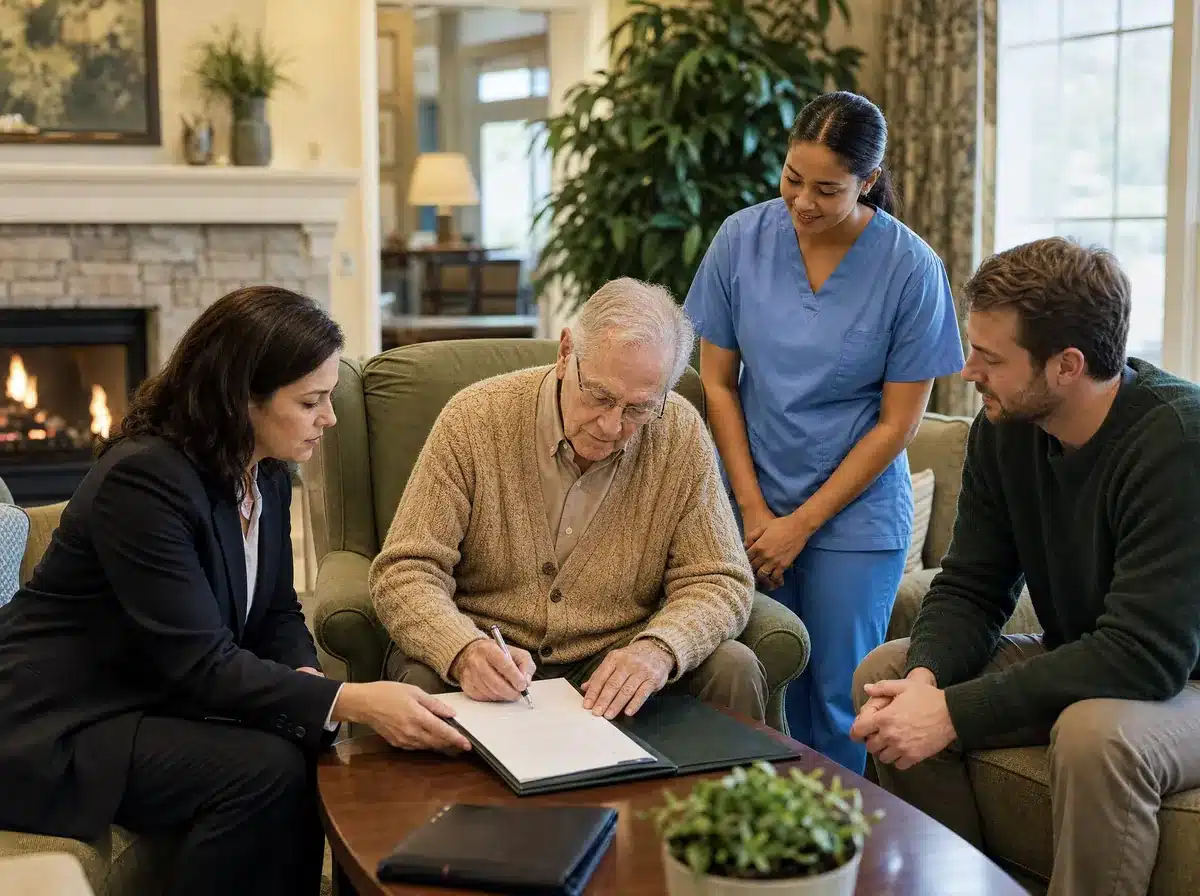
Offices and businesses. Employers call us for I-9 verification and corporate resolutions that need several officers in one room. Law firms and title companies book us for signings their own staff cannot cover, especially evenings and Saturdays.
Care facilities. Nursing homes, memory-care units, hospice and rehab centers are a steady part of our work, usually for families arranging powers of attorney or health care proxies for a parent. We schedule around care routines.
Our coverage runs across 177 Massachusetts cities and towns, from Gardner and Athol in the west through Lowell and Tewksbury to Boston, Cambridge and the North Shore; see the full list of service locations. Same-day and after-hours visits are available by confirmation, seven days a week.
How much do mobile notary services cost in Massachusetts?
Mobile notary services in Massachusetts are priced as a flat visit fee that bundles travel, one notarial seal and the first 15 minutes of service; our rates start at $125 per visit. The price depends on the travel zone, with additional seals, extra signers and longer appointments quoted before the notary is dispatched.
We divide our service area into three zones. Zone 1, our home base, covers Tewksbury, Gardner, Ashby and Athol from $125 per visit. Zone 2, nearby towns, covers Lowell, Billerica, Andover, Chelmsford, Dracut, Lawrence, Worcester, Fitchburg, Leominster, Concord, Burlington, Woburn and more than 40 other communities from $179 per visit; it is our most-booked zone. Zone 3, Metro Boston and beyond, covers Boston, Cambridge, Newton, Lexington, Wellesley, Weston, Lynn, Gloucester, North Andover and 110-plus other cities and towns from $250 per visit, with hospital and nursing-home visits included at the same rate.
The town-by-town breakdown is on our notary zones and pricing page, and our guide to the cost of a mobile notary in Massachusetts explains what moves a quote above the floor: a second signer, a trust package with a dozen seals, a 7 a.m. hospital visit or a weekend closing.
If you can travel, the lowest-cost route is our office. In-office notarization at 1215 Main St, Suite 115 in Tewksbury is $45 per notarial act, by appointment. Apostille requests carry the $6 Massachusetts state fee plus our service fee, and loan signings and multi-document appointments are quoted by complexity.
Need a mobile notary this week?
Same-day and after-hours visits across 177 Massachusetts towns. Flat zone pricing confirmed before we leave.
Who uses mobile notary services most?
The heaviest users of mobile notary services are families handling estate and health care documents, attorneys with signings outside their office, lenders who need loan packages executed at the borrower’s convenience, employers verifying I-9s, and business owners signing documents that require several people in one place. The common thread is that the signer’s location or schedule, not the document, is the obstacle.
Families. Powers of attorney, health care proxies, wills, trusts and deeds moving a home into a trust are the core of our residential work. Our power of attorney notarization and trust and will notarization pages explain the specific checks involved. Under M.G.L. c.190B a Massachusetts will is executed before two witnesses, and those witnesses are the family’s responsibility to arrange.
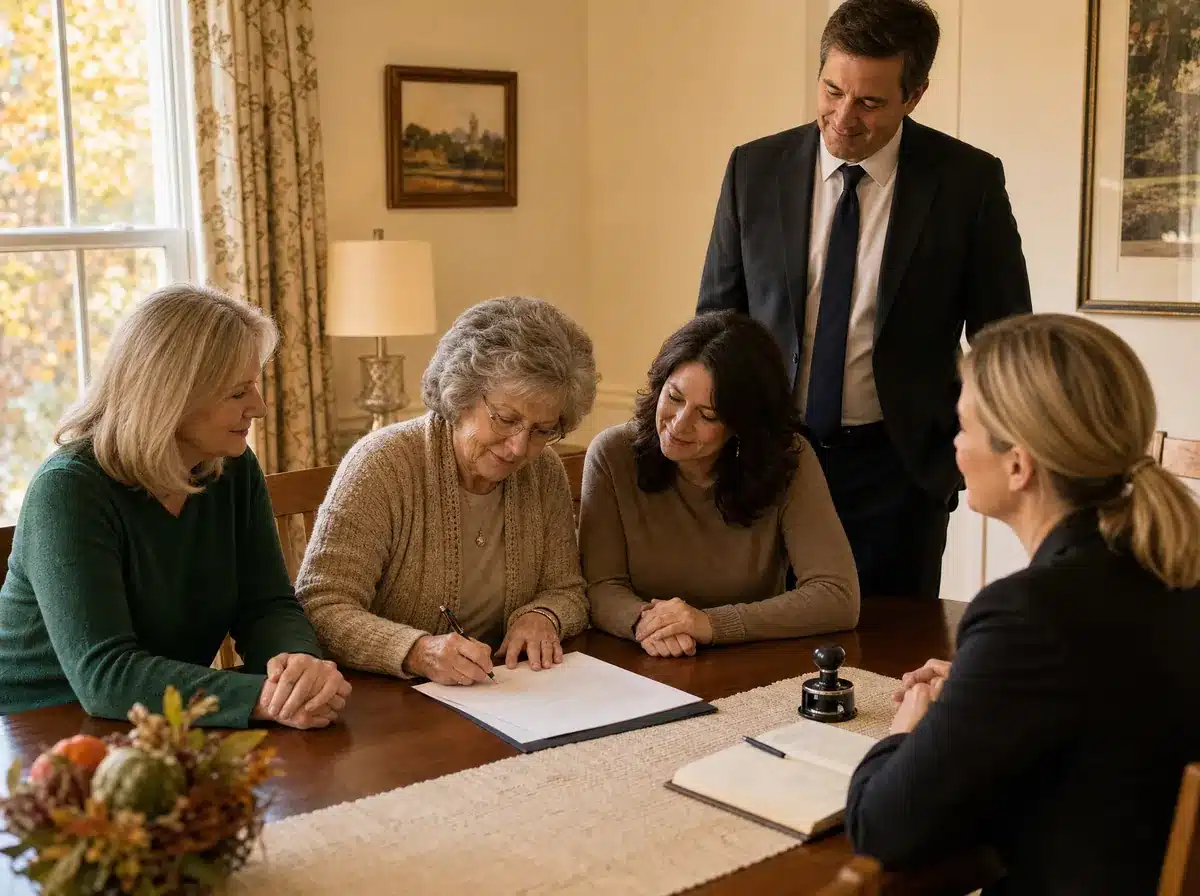
Attorneys. Estate planners send us to clients who cannot come to the office, litigators need affidavits sworn on a deadline, and real estate attorneys, who conduct every Massachusetts closing, book us as the notary for seller packages and refinances. We handle logistics and leave every legal question to them.
Lenders and title companies. Refinances, HELOCs, reverse mortgages and loan modifications are executed at the borrower’s kitchen table, often in the evening. As an NNA Certified Loan Signing Agent, we present each document by name, collect every signature and initial, and ship the package back the same day; the closing attorney remains in charge of the closing.
Employers. Federal Form I-9 requires an authorized representative to inspect a new hire’s original documents in person. Companies with remote onboarding or small HR teams book our I-9 verification service so the inspection is done correctly and on time.
Business owners. Corporate resolutions, bank signature cards, commercial leases, bills of sale, vehicle titles and partnership documents often need several signatures at once. Our business and corporate notary services page covers multi-officer signings, including bilingual signings in Arabic and French.
How should you prepare for a mobile notary appointment?
Preparing for a mobile notary visit comes down to four things: a complete, unsigned document; a valid photo ID for every signer; any witnesses the document requires; and a clear idea of what the receiving party expects. Miss one and the notary may have to return, with a second visit fee.
Print the whole document, and do not sign it yet. Bring every page, including exhibits and the certificate page, and fill in all blanks in the body except the signature and date lines. If the preparer told you to sign in advance, call them; most documents must be signed in the notary’s presence.
Have current ID ready. Each signer needs an unexpired government-issued photo ID with a signature. For a hospital or nursing-home signer, ask a family member to bring the license or passport from home; a wristband is not identification.
Arrange witnesses yourself. Wills, some deeds and certain out-of-state forms require one or two adult witnesses who are not named in the document and are not the notary. We do not provide witnesses under any circumstances.
Ask the receiving party what they need. The registry, court, bank or foreign consulate that will receive the document decides what certificate wording it accepts, and documents bound overseas may also need an apostille. Five minutes with the recipient before the notary arrives prevents the most common reason for a second visit.
The full checklist, including what to do when a signer cannot hold a pen or needs a translator, is in our guide to how to prepare for a mobile notary. If your document only needs a signature witnessed, see signature witnessing; for Saturday and Sunday scheduling, see weekend notary service.
Mobile notary services FAQ
What is the difference between a mobile notary and a notary public?
There is no difference in authority. A mobile notary is a notary public who travels to the signer’s location instead of working from a fixed office. Both hold the same Massachusetts commission under M.G.L. c.222, perform the same notarial acts and produce a seal of equal legal weight; the mobile fee is higher only because it includes travel.
Does a mobile notary bring witnesses?
No. We do not provide, supply, coordinate or serve as witnesses. If your will, deed or other document requires witnesses, you arrange qualified adults who are not named in the document before the appointment. The notary’s signature on the certificate does not count as a witness signature.
Can a mobile notary notarize a document I have already signed?
It depends on the notarial act. For an acknowledgment, you may have signed earlier as long as you appear before the notary with ID and acknowledge the signature as yours. For a jurat or signature witnessing, the signature must be made in the notary’s presence. When in doubt, wait and sign at the appointment.
What ID do I need for a mobile notary in Massachusetts?
A current, unexpired government-issued photo ID that bears your signature, such as a Massachusetts driver’s license or ID card, a U.S. passport or passport card, or a military ID. The name on the ID must match the name on the document. If a signer has no acceptable ID, call us before booking so we can discuss the options Massachusetts law allows.
Can a mobile notary come to a hospital or nursing home?
Yes. Hospital, rehab, assisted living and nursing-home visits are included in every zone rate, with no facility surcharge. The signer must be able to show ID, communicate with the notary directly and demonstrate that they understand what they are signing. If the signer cannot do that on the day, the notary will reschedule rather than proceed.
How quickly can a mobile notary get to me?
Same-day visits are available across our Massachusetts service area, subject to confirmation, and we work seven days a week including evenings. During business hours a request is typically confirmed within the hour. For time-sensitive signings, call (978) 424-4629 rather than booking online so we can check the route live.

1,190+ signings across Greater Boston, the Merrimack Valley and Central Massachusetts. Background screened, bonded and E&O insured. Fluent in English, Arabic and French. About Hanson


